What Actually Happens to Your Brain and Body During a Sound Bath
by the Soulful Creatrix content team, on behalf of Dr. Asia Taylor
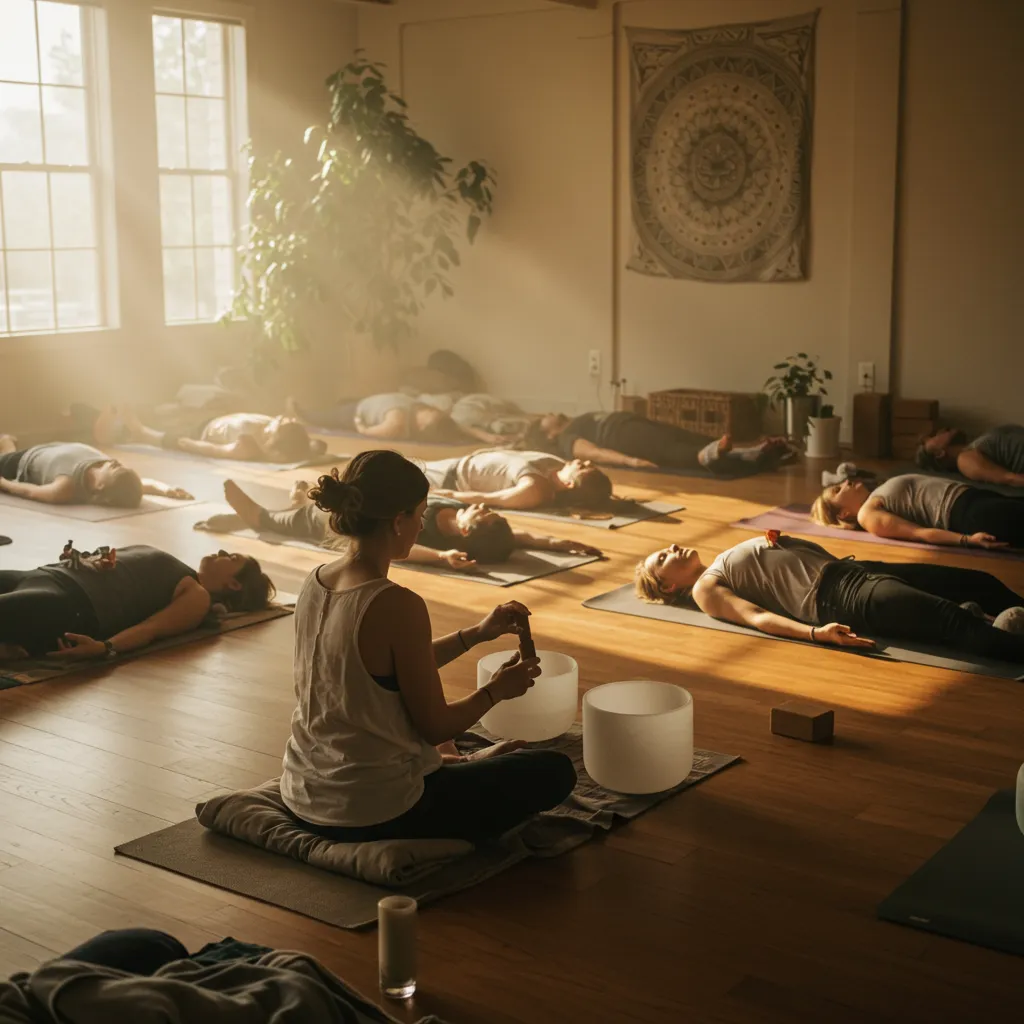
You lie down. You let your spine soften into the floor. Somewhere in the room, a bowl begins to sing, and a low, round tone that seems to move through you rather than simply toward you. Your breath slows. Your shoulders, which have been quietly clenched since Tuesday, finally remember how to drop.
It feels like magic. But here’s the beautiful truth: it isn’t.
What’s happening inside you during a sound bath is real, measurable, and rooted in the way your nervous system was always designed to work. The mystery and the science aren’t enemies here; they’re dance partners. So let’s pull back the curtain and look at what’s actually unfolding in your brain and body when the sound washes over you.
Your Brainwaves Shift Gears
Your brain is electric — quite literally. It hums along at different frequencies depending on what you’re doing, and we measure those frequencies in brainwaves.
Most of your waking day is spent in beta, the alert, busy, to-do-list state. It’s useful. It’s also exhausting when you live there all the time, which most of us do.
During a sound bath, the steady, repetitive tones gently coax your brain to slow down into alpha (relaxed, daydreamy, the state just before sleep) and often into theta, the deeply meditative, almost dreamlike frequency where insight, creativity, and emotional release tend to surface.
Here’s the best part: experienced meditators sometimes spend years learning to drop into theta on command. Sound offers a shortcut. The consistent vibrations give your brain something simple to follow, and it naturally falls into step through a phenomenon called entrainment, where your internal rhythms sync to an external one. Think of it like your nervous system finding the beat of a slower, kinder song.
Your Nervous System Switches Out of “Threat” Mode
Most modern lives are run by an overworked sympathetic nervous system, your “fight, flight, or refresh-your-inbox” response. It’s wonderful in genuine emergencies and terrible as a permanent lifestyle.
Sound healing speaks directly to your parasympathetic nervous system, the “rest and digest” branch that handles repair, calm, and restoration. As the tones settle in, this is the part of you that comes online. Your heart rate eases. Your breathing deepens without you forcing it. The constant background hum of low-grade alert quiets down.
This shift isn’t just a nice feeling. When your parasympathetic system is engaged, your body finally gets the green light to do its housekeeping — the cellular repair, the emotional processing, the deep restoration that simply can’t happen when you’re braced for impact.
Stress Chemistry Begins to Unwind
When you live in chronic stress, your body marinates in cortisol and adrenaline. Helpful in a sprint, corrosive over a lifetime.
Relaxation practices like sound baths are associated with lowering those stress hormones and inviting in the body’s feel-good chemistry instead. Many people leave a session reporting less tension, clearer thinking, and a lightness in the chest that wasn’t there an hour before. That’s your internal chemistry recalibrating toward balance.
You Feel the Sound, Not Just Hear It
Here’s something we don’t talk about enough: your body is mostly water. And sound travels through water beautifully.
When a gong swells or a bowl resonates, you don’t just receive those vibrations through your ears. You feel them ripple across your skin, in your chest, along your bones. This is why a sound bath can feel so full-bodied, almost like being held. You’re not a spectator to the sound. You’re inside it.
For many people — especially empaths and highly sensitive souls — this full-body immersion is exactly what makes sound healing land so deeply. It bypasses the busy, analyzing mind and speaks straight to the body, which often holds what our thoughts can’t reach.
Why Emotions Sometimes Rise to the Surface
Don’t be surprised if a tear slips out, or a wave of unexpected feeling moves through you. This is one of the most sacred parts of the experience.
When your nervous system finally feels safe enough to let go, the things you’ve been holding (grief, tension, old stories stored in the body) can finally move. The sound creates a container of safety, and within that safety, release becomes possible. It’s not a malfunction. It’s the medicine working.
If you are more sensitive to the energies of others, the community partaking in the sound bath session with you can also add to the emotional output of your session.
So… Is It Science or Is It Spirit?
It’s both. And I think that’s the most beautiful part.
The brainwave shifts, the parasympathetic activation, the easing of stress chemistry...all of this is grounded in physiology. And the sense of coming home to yourself, of touching something deeper and more ancient, of being held by something larger is all real too. Sound has been used in sacred and healing traditions across the world for thousands of years, long before we had the instruments to measure brainwaves. Our ancestors knew. Now we simply have the language to explain why they were right.
You don’t have to choose between the two. You get to lie down, let the tones wash over you, and trust that whatever you need to release, restore, or remember. Your body already knows the way.
Ready to Feel It for Yourself?
Reading about a sound bath is a little like reading about the ocean. Lovely, but nothing compares to actually floating in it.
If you’re curious to experience what your own brain and body do when the sound moves through you, I’d be honored to hold that space for you. You can find the Creatrix Community Sound Bath schedule here.
Come as you are. Bring your tiredness, your tension, your tender heart. The sound will meet you there.
Wishing you Many Continued Blessings,
Dr. Asia