
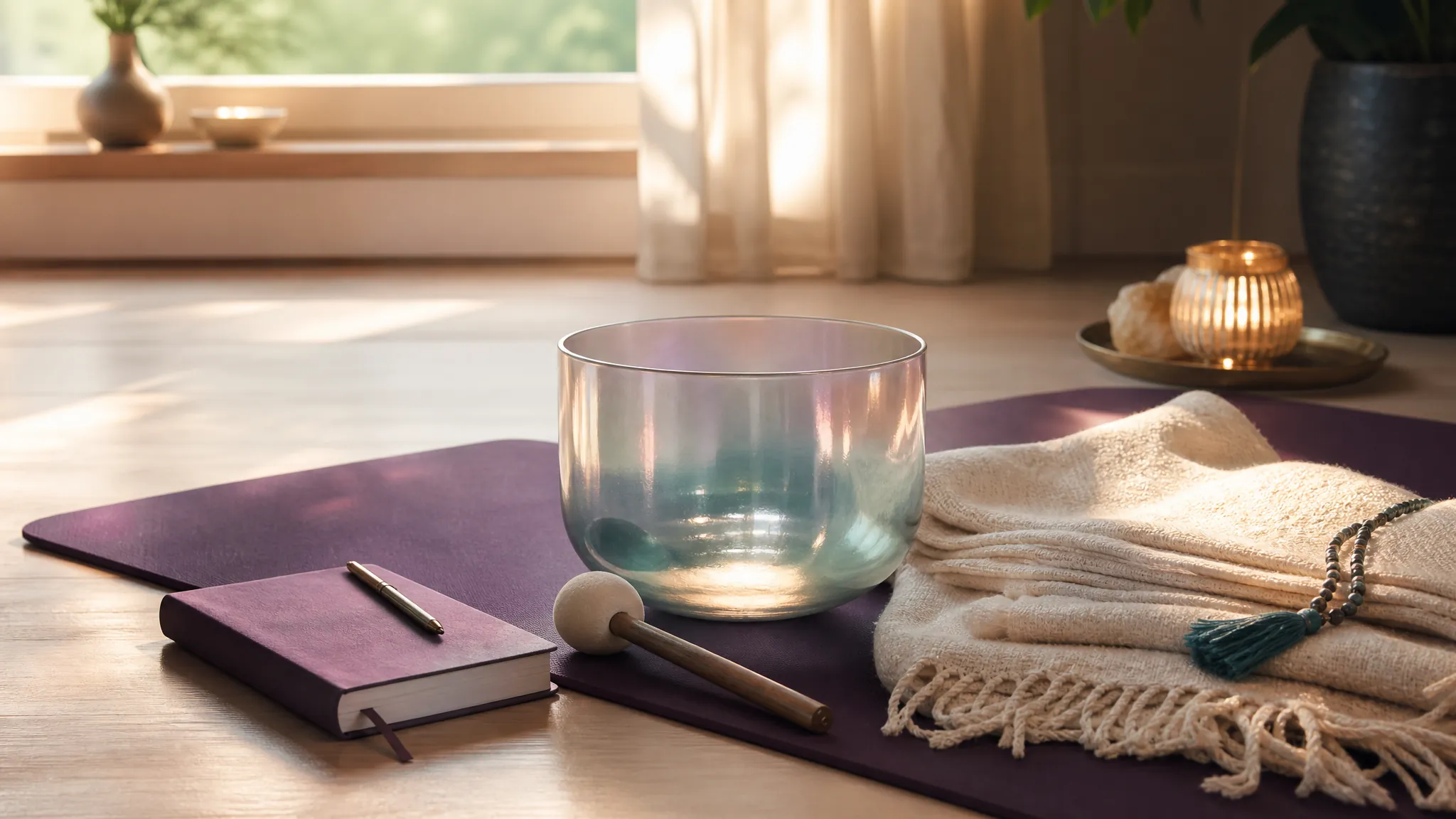
If you are pregnant and wondering whether a sound bath is safe, the honest answer is: it depends on the setting, the volume, your body, and your care provider's guidance. A gentle, spacious sound bath can feel deeply calming for many people. A loud, intense, crowded, or vibration-heavy session may not be the right fit during pregnancy.
That middle ground matters. Pregnancy is already a season of changing sensation, shifting sleep, heightened emotion, and a nervous system that may be asking for softer support. A sound bath should not ask you to push through discomfort. It should help you settle, breathe, and feel more connected to your own body.
This guide is not medical advice, and it should not replace the guidance of your obstetrician, midwife, or prenatal care team. It is a practical way to think through the question before you attend a group sound bath, book a private session, or choose a quieter at-home practice. If you want a local option, Dr. Asia's sound and vibrational sessions can be adapted for comfort, volume, and pace.
The short answer: gentle is the word
For a healthy pregnancy, many people can enjoy a calm sound bath when the experience is moderate in volume, physically comfortable, and easy to leave or adjust. The important question is not only, "Is sound healing safe?" It is, "Is this specific session appropriate for my pregnancy, my trimester, my symptoms, and my nervous system today?"
A sound bath is usually a meditative experience where you rest while instruments such as crystal singing bowls, chimes, gongs, drums, tuning forks, or voice create layered sound. Some sessions are very soft and spacious. Others build toward strong vibration, low tones, or dramatic gong work. Those differences matter during pregnancy.
A thoughtful facilitator should be willing to answer simple questions before you arrive: How loud does the session get? Are gongs or drums used close to the body? Can I lie on my side? Can I sit up? Can I move farther away from the instruments? Can I step out if I feel uncomfortable? If the answer feels dismissive, choose another room. Pregnancy is not the season for spiritual bravado.
What the safety conversation is really about
Most pregnancy concerns around sound baths come down to volume, vibration, and physical comfort. The CDC's workplace guidance on noise and reproductive health explains that outside sounds are reduced inside the womb but not completely silenced. It also says some experts advise pregnant people not to be routinely around noise louder than 115 dBA.
That 115 dBA level is very loud, roughly chainsaw territory. Most gentle wellness sound baths should be far below that, but the point is not to chase a number after the fact. The point is to avoid intense volume, sudden startling sounds, heavy low-frequency vibration, or being very close to a powerful instrument. The CDC also notes that low-frequency rumbling sounds travel through the body more easily, which is one reason distance from gongs, drums, speakers, and large bowls can matter.
For adult hearing, NIOSH describes 85 dBA averaged over an eight-hour workday as its recommended exposure limit. A sound bath is not an eight-hour industrial shift, but the principle still helps: loudness, duration, and repetition all matter. A softer 45-minute session is a different experience from sitting beside a gong during a powerful crescendo.
This is why a good pregnancy-friendly session should feel spacious. You should not be right next to the loudest instrument. You should not have bowls placed directly on the belly. You should not feel trapped in a pose. You should not be told that discomfort is "energy moving" and therefore something to endure. Your body gets a vote.
First trimester, second trimester, and third trimester considerations
Pregnancy is commonly described in three trimesters. The National Institute of Child Health and Human Development describes pregnancy as lasting about 40 weeks, with the first trimester from weeks 1 to 12, the second from weeks 13 to 28, and the third from week 29 to birth. Your needs can change a lot across those stages.
In the first trimester, nausea, fatigue, smell sensitivity, dizziness, and emotional tenderness can be strong. The main question may be whether lying down in a shared room feels good at all. If you are newly pregnant, high risk, bleeding, cramping, or waiting for medical clarity, ask your provider before attending. If you go, choose a gentle session, stay near an exit, bring water, and avoid anything intense or hot.
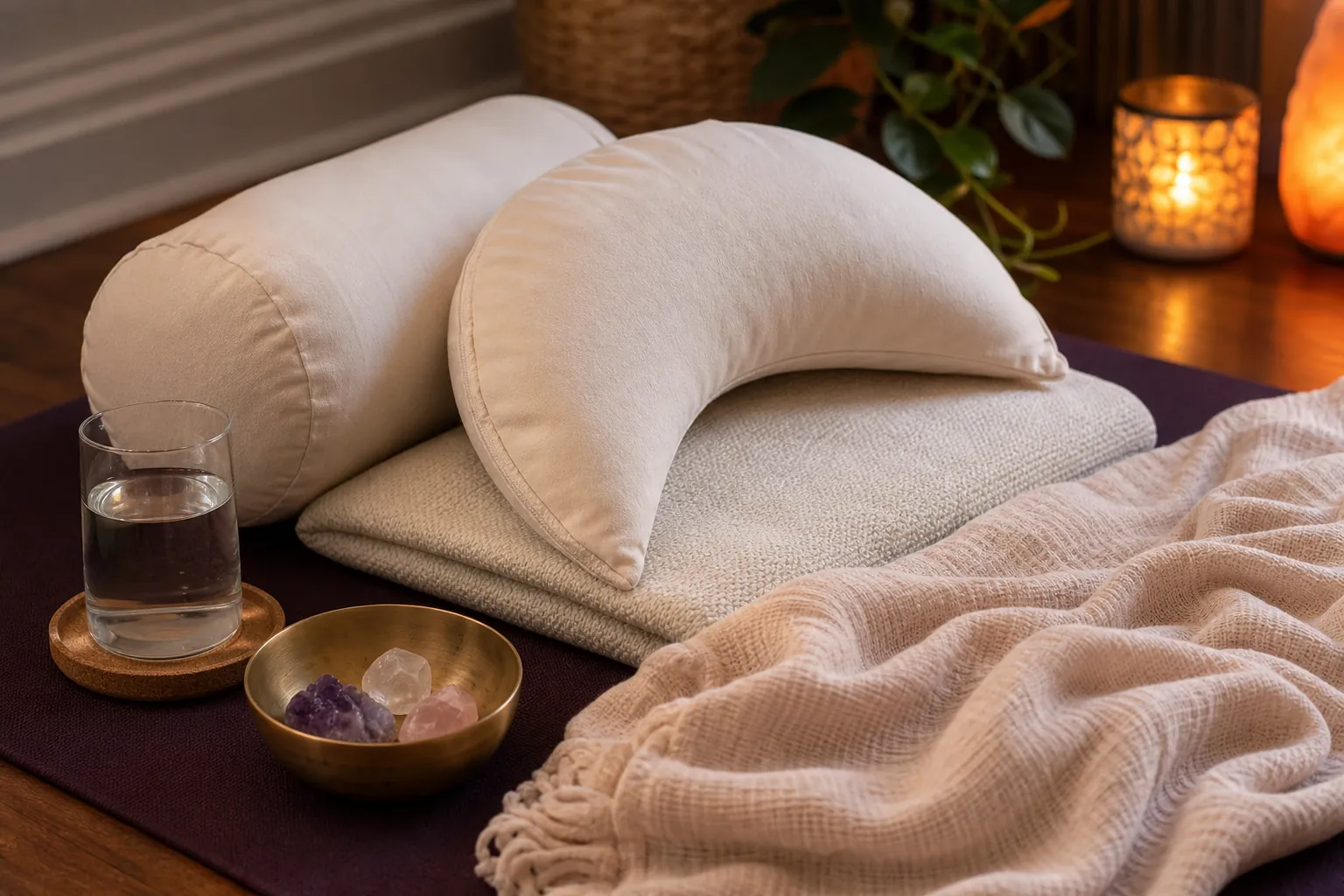
In the second trimester, some people feel more settled and may enjoy the spaciousness of a sound bath. Comfort still matters. Lying flat for a long period may not feel right for everyone, especially as pregnancy progresses. A side-lying setup with pillows, a bolster under the knees, or an elevated upper body can make the difference between receiving and enduring.
In the third trimester, positioning becomes even more important. You may need extra support under the belly, between the knees, behind the back, or under the head. You may also need more room to change positions. If a group session is packed shoulder-to-shoulder, it may be less supportive than a private or smaller session where you can move freely.
Across every trimester, the better question is not, "Can I technically attend?" It is, "Will this environment help me feel safer in my body?" If the answer is no, there are other ways to work with sound.
How to choose a pregnancy-friendly sound bath
Before you book, ask the facilitator how they adapt sessions for pregnancy. A confident, grounded practitioner should be able to answer without making sweeping promises. Listen for practical adjustments: lower volume, more space from instruments, no bowls on the belly, side-lying support, permission to sit up, permission to leave, and awareness around startling sounds.
Ask what instruments are used. Crystal bowls, chimes, soft voice, and gentle tones may feel very different from large gongs, strong drums, deep bass speakers, or intense low-frequency instruments. None of those instruments are automatically bad, but pregnancy can make the body more responsive. If you already know you startle easily or feel overwhelmed by low rumble, choose the softer room.
Ask about room setup. A pregnancy-friendly space should let you rest on your side, elevate your head, stretch your legs, and move without embarrassment. Bring your own props if that helps: two pillows, a blanket, water, a snack for afterward, and anything your body already knows as comfort.
Ask whether the session includes breathwork, chanting, heat, essential oils, smoke, or hands-on adjustments. A plain sound bath may be simple. A combined ceremony may include elements that are not a fit for pregnancy, scent sensitivity, asthma, nausea, trauma history, or your personal boundaries. You are allowed to ask. You are allowed to decline pieces. You are allowed to leave.
When to skip the group session
Skip the group sound bath, or get medical guidance first, if you have been told to avoid certain activities, if your pregnancy is high risk, if you have unexplained bleeding or pain, if you feel dizzy or faint, if you are on bed rest, or if your provider has concerns about vibration, noise, positioning, or stress.
Also skip it if the event description leans intense: huge gongs, powerful release work, very loud drumming, deep bass, crowded room, heat, long breath holds, strong smoke, or language that says you must surrender through discomfort. That may be meaningful for someone else. It does not need to be your medicine today.
Mental and emotional safety counts too. ACOG notes that treating anxiety can help you and your pregnancy. If a sound bath helps your body soften, beautiful. If it increases anxiety because the sounds feel unpredictable, choose a steadier practice. The goal is regulation, not proving you can tolerate the room.
A gentle at-home sound practice
If a public sound bath feels like too much, try a smaller ritual at home. Keep the volume low. Sit or lie on your side in a position that feels easy. Choose one soft sound: a quiet singing bowl recording, gentle chimes, humming, soft instrumental music, or your own voice. Set a timer for 10 minutes instead of forcing a full hour.
Begin by noticing three points of support: the floor under your feet, the pillow behind your back, the blanket over your body. Let the sound be background, not a demand. If the baby moves, if your body shifts, or if emotion rises, pause and breathe. You can stop at any time. A short practice that leaves you feeling steady is more useful than a long practice that leaves you depleted.
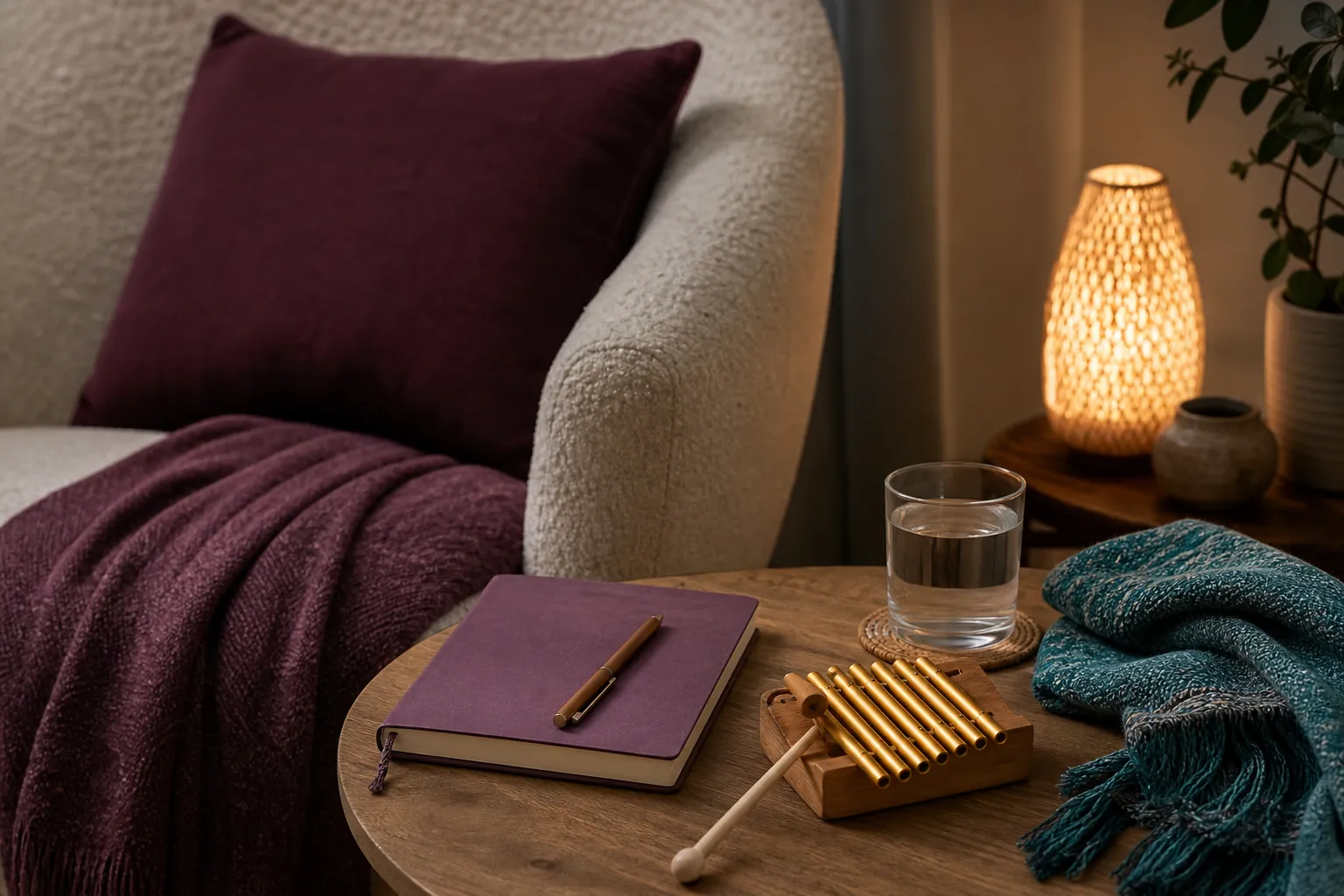
You can also use humming. It is free, portable, and gentle. Place one hand on your chest, breathe comfortably, and hum on the exhale at a volume that feels soothing. Do this for five rounds. Notice whether your jaw softens, your shoulders drop, or your breath becomes easier. That is enough.
How Dr. Asia supports a softer session
Dr. Asia's work is rooted in sound healing, energy work, Human Design, and spiritual guidance, but the real value is the way the session can be shaped around the person in the room. During pregnancy, that means the body leads. Volume, distance, pacing, and position can be adjusted so the session supports calm instead of intensity.
If you are local to West Palm Beach, you can start with the current community sound bath calendar or choose a more personal path through a clarity call. If you are navigating a larger season of identity, grief, or becoming, the Coherence Blueprint™ offers deeper support beyond a single session.
The simplest rule is this: pregnancy-friendly sound healing should feel respectful. It should respect your provider's guidance, your body's signals, your need to move, your right to ask questions, and your choice to stop. The right session will never make you override yourself to receive it.
Frequently asked questions
Are sound baths safe during pregnancy?
Many pregnant people can enjoy a gentle sound bath, but safety depends on the volume, vibration, positioning, your pregnancy, and your care provider's guidance. Choose a moderate session, avoid intense low-frequency vibration, and leave if your body feels uncomfortable.
Can I attend a sound bath in the first trimester?
Possibly, but the first trimester can bring nausea, fatigue, dizziness, and medical uncertainty. Ask your provider if you have symptoms or risk factors, and choose a short, gentle session where you can sit up, move, or leave easily.
Should singing bowls be placed on my belly while pregnant?
Avoid placing singing bowls or strong vibrating instruments directly on the belly during pregnancy. A more cautious choice is to keep instruments at a comfortable distance and let the sound stay gentle.
What should I ask before booking a pregnancy sound bath?
Ask how loud the session gets, which instruments are used, whether gongs or drums are included, whether pregnancy positioning is supported, and whether you can move away from the instruments or leave early.
What if sound makes me anxious while pregnant?
Stop or choose a quieter practice. Sound healing should help you feel more regulated, not more overwhelmed. Humming, soft music, or a brief at-home practice may be a better fit on sensitive days.
Is a private sound healing session better during pregnancy?
A private session can be easier to adapt because the volume, instruments, pacing, and physical setup can be shaped around you. Group sessions can still be supportive when they are gentle and spacious.


