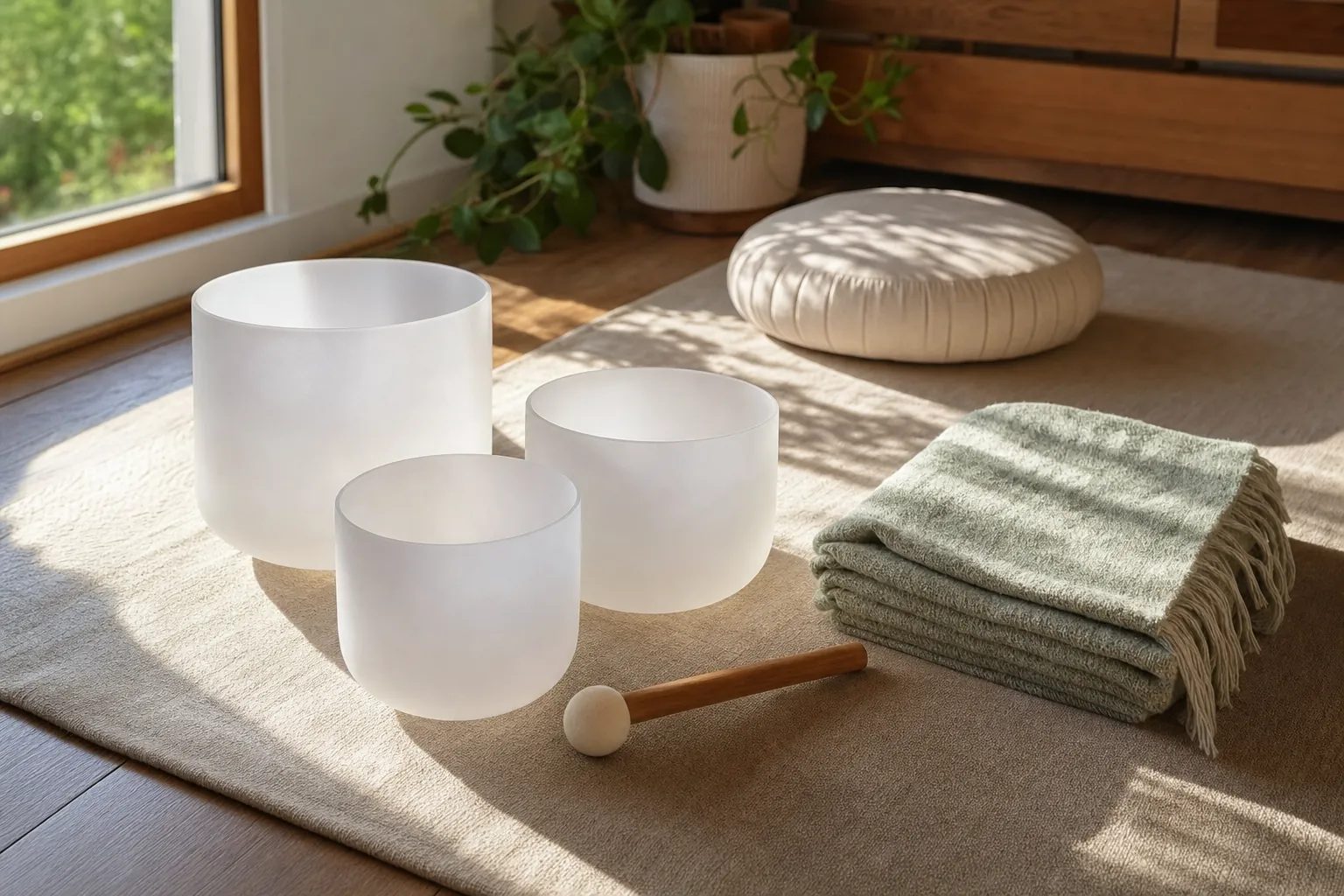
A sound bowl meditation gives your attention somewhere gentle to land. Instead of trying to force your mind into silence, you sit or lie down and let one clear tone become an anchor. You notice the beginning of the sound, the way it lingers, the way it fades, and the quiet that follows. That is enough to begin.
You do not need a room full of instruments, a perfect meditation posture, or a dramatic spiritual experience. A single singing bowl, a soft recording, or even a few minutes of humming can create a useful container for pausing. The practice is less about doing something impressive and more about giving your body a little less to manage for ten minutes.
This guide is for the person who has seen crystal bowls at a yoga studio, heard a recording online, or been curious after reading about a sound bath and wondered, "What do I actually do with this?" You will find a simple practice below, plus a few ways to make it feel more comfortable and more honest to your own nervous system.
What is a sound bowl meditation?
A sound bowl meditation is a listening practice built around the sustained tone of a singing bowl. Some bowls are made from metal. Others are made from crystal. They can be played by striking them gently or by circling the rim with a mallet. The sound changes as it travels, which gives a busy mind a concrete detail to return to without needing to wrestle every thought away.
This is one form of sound meditation, not a separate medical treatment. The National Center for Complementary and Integrative Health describes meditation as a group of practices that can use a particular sensation, including sound, as a point of focus. In that sense, the bowl is simply an invitation to practice attention with something you can hear.
The language around sound can become very grand, very quickly. You do not need to believe that a bowl will fix your life in order to receive something from the pause. A sound bowl meditation may help you create a slower moment, notice your breathing, or step out of a loop of rushing for a little while. That is a real and worthwhile use of the practice.
What a sound bowl meditation can and cannot promise
People often use bowls because the tones feel soothing, spacious, or easier to follow than silence. Research on singing bowls is still limited. Cleveland Clinic notes that a review of the small body of peer-reviewed research found possible benefits after playing or listening to singing bowls, while also calling for more evidence-based research. That is the right level of certainty to bring into the room: curious, open, and not overpromised.
One observational study of Tibetan singing bowl meditation reported changes in tension and mood among participants, but it cannot prove that bowls treat a condition or work the same way for everyone. You can read the original study if you are interested in the details. A sound bowl meditation can be a supportive wellness or spiritual practice. It is not a replacement for therapy, medical care, medication, emergency support, or treatment from a qualified health professional.
There is another reason to keep expectations gentle: meditation is not neutral for every person, every day. If sound, stillness, or closing your eyes makes you feel more anxious, activated, dizzy, or disconnected, choose a shorter practice, keep your eyes open, sit near a door, or skip it altogether. Your body does not need to be persuaded into relaxation.
Set up a practice that your body will actually accept
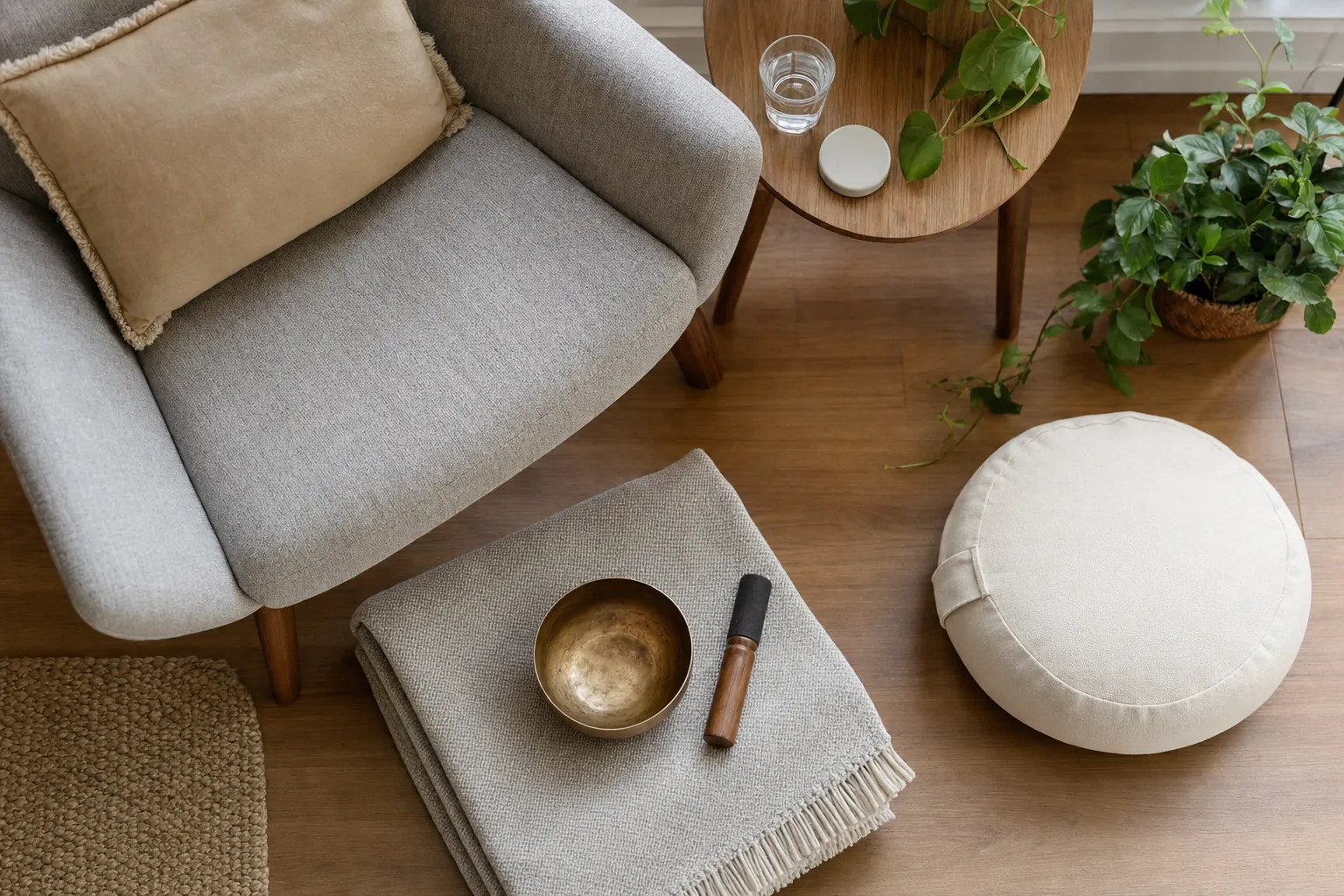
The most useful setup is often the least fussy one. Start with a chair if the floor does not feel good. Add a cushion behind your back, a blanket over your legs, and a glass of water nearby. If you are on the floor, support your knees, head, or hips before you begin. Physical discomfort has a way of becoming the loudest instrument in the room.
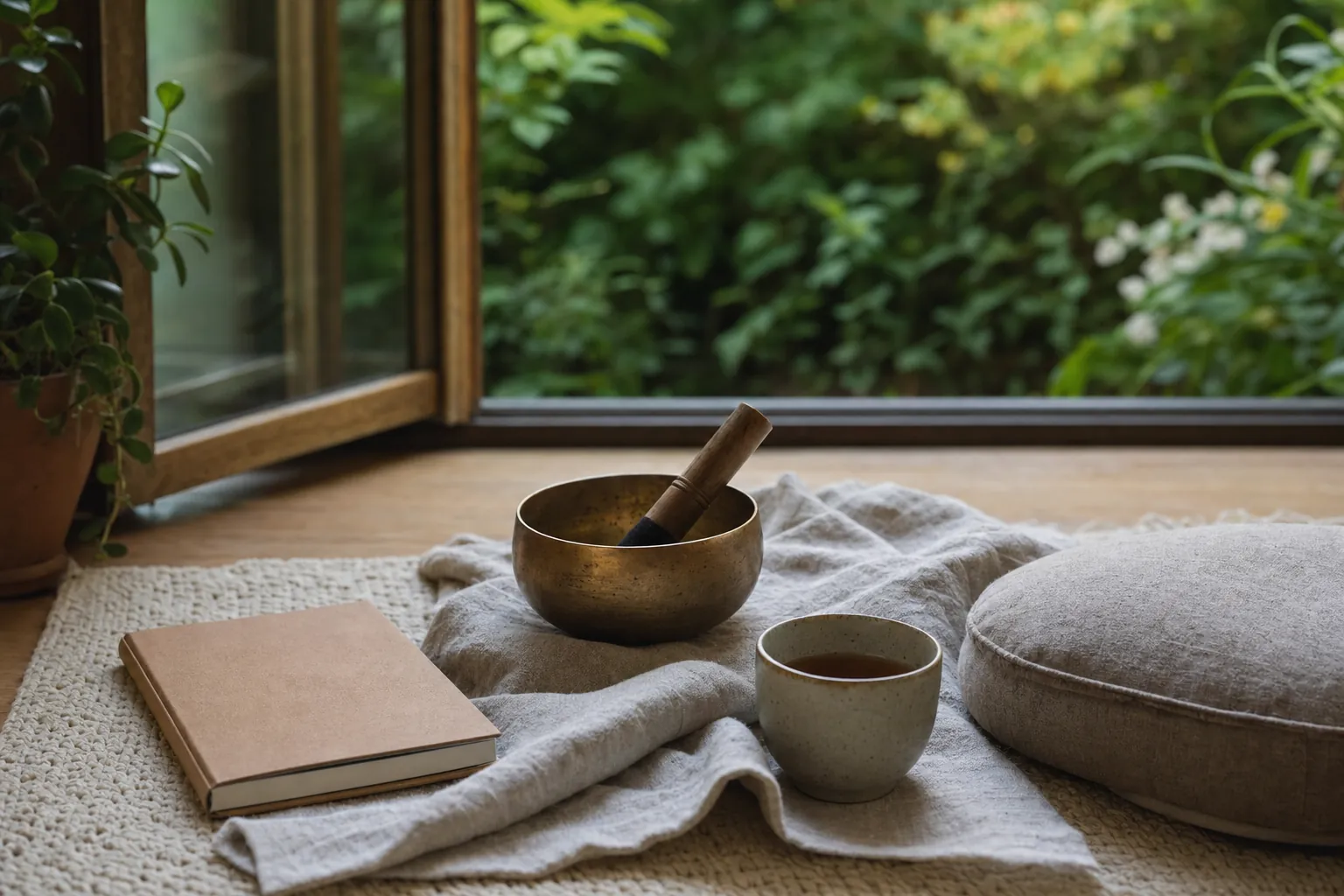
Choose one source of sound. If you have a bowl, place it on a steady surface where it will not be knocked over. If you are using a recording, keep the volume low enough that you can still hear the room around you. You do not need headphones, and louder is not deeper. The goal is to be able to listen without bracing.
Give yourself permission to make the practice accessible. You can keep your eyes open. You can recline. You can pause to adjust your position. You can stop after two minutes. If you have hearing concerns, tinnitus, a recent concussion, or a strong sensitivity to sound, check with the appropriate clinician before experimenting and keep any sound at a level that feels comfortable. The National Institute on Deafness and Other Communication Disorders advises protecting your hearing by reducing exposure to sounds that feel too loud or uncomfortable.
A simple 10-minute sound bowl meditation
Set a timer for ten minutes. This is not a test of your ability to stay still. It is a small container that lets you begin without making the practice feel like another responsibility. If ten minutes feels like too much, make it five. If you want to stay longer, let that be a choice you make after the first ten rather than an expectation you carry in.
Minute 1: arrive in the room. Feel the support under you. Notice three ordinary things: the temperature of the air, the contact of your feet or legs with the chair or floor, and one sound that is already present. Take one comfortable breath. You do not need a special breathing pattern. You are simply letting your attention catch up with your body.
Minutes 2 through 4: begin the sound. Strike the bowl softly, or start your recording. Rather than asking whether you are doing it right, follow the shape of one tone. Notice its first clear moment. Notice whether it gets brighter, warmer, thinner, or quieter as it fades. When you realize you have wandered into a thought, name it gently as thinking and return to the sound without scolding yourself.
Minutes 5 through 7: listen to the silence around the tone. You can play the bowl again when the sound has nearly finished, or let a recording continue in the background. Try not to fill every second. The small gap between sounds is part of the practice. It gives you a chance to notice your jaw, shoulders, hands, or breath without trying to change them.
Minutes 8 and 9: widen your attention. Let the bowl be one part of the room rather than the only thing you are trying to hear. Notice the fabric under you, the light through a window, distant traffic, a fan, or the sound of your own exhale. This is where the practice becomes less about escaping your life and more about returning to it with a little more presence.
Minute 10: let the final tone fade. Do not rush to decide whether the practice worked. Sit for three normal breaths, open your eyes if they were closed, and notice one thing that feels different from the beginning. It may be as small as realizing you were holding your shoulders up. Then stand slowly, drink some water, and continue with your day.
What to do when your mind will not settle
A restless mind is not proof that you are bad at meditation. It is usually proof that you have a mind. When you are tired, grieving, planning, worried, or simply used to moving quickly, ten quiet minutes can make thoughts feel louder at first. The practice is not to make them disappear. The practice is to notice that you have drifted and come back to one sensory detail.
Try giving yourself a smaller job. Listen for the longest part of the tone. Notice the first moment you can no longer hear it. Feel one breath moving in and one breath moving out. Put a hand on your chest or thigh if that helps you stay oriented. Specific, ordinary details are often more grounding than trying to create a particular feeling.
If you are overwhelmed, stop the sound. Look around the room and name five objects. Put your feet on the floor. Text a friend. Make tea. Meditation is not a contest in endurance, and the right practice is the one that leaves you more able to meet the next part of your day.
Should you use a crystal bowl, metal bowl, or recording?
Use what you have and what feels sustainable. A crystal bowl can produce a long, bright tone that some people find spacious. A metal singing bowl may have a warmer, more textured sound. A recording can be the easiest doorway because it does not require technique, storage, or a purchase. There is no need to rush into buying a set of bowls before you know whether you enjoy the practice.
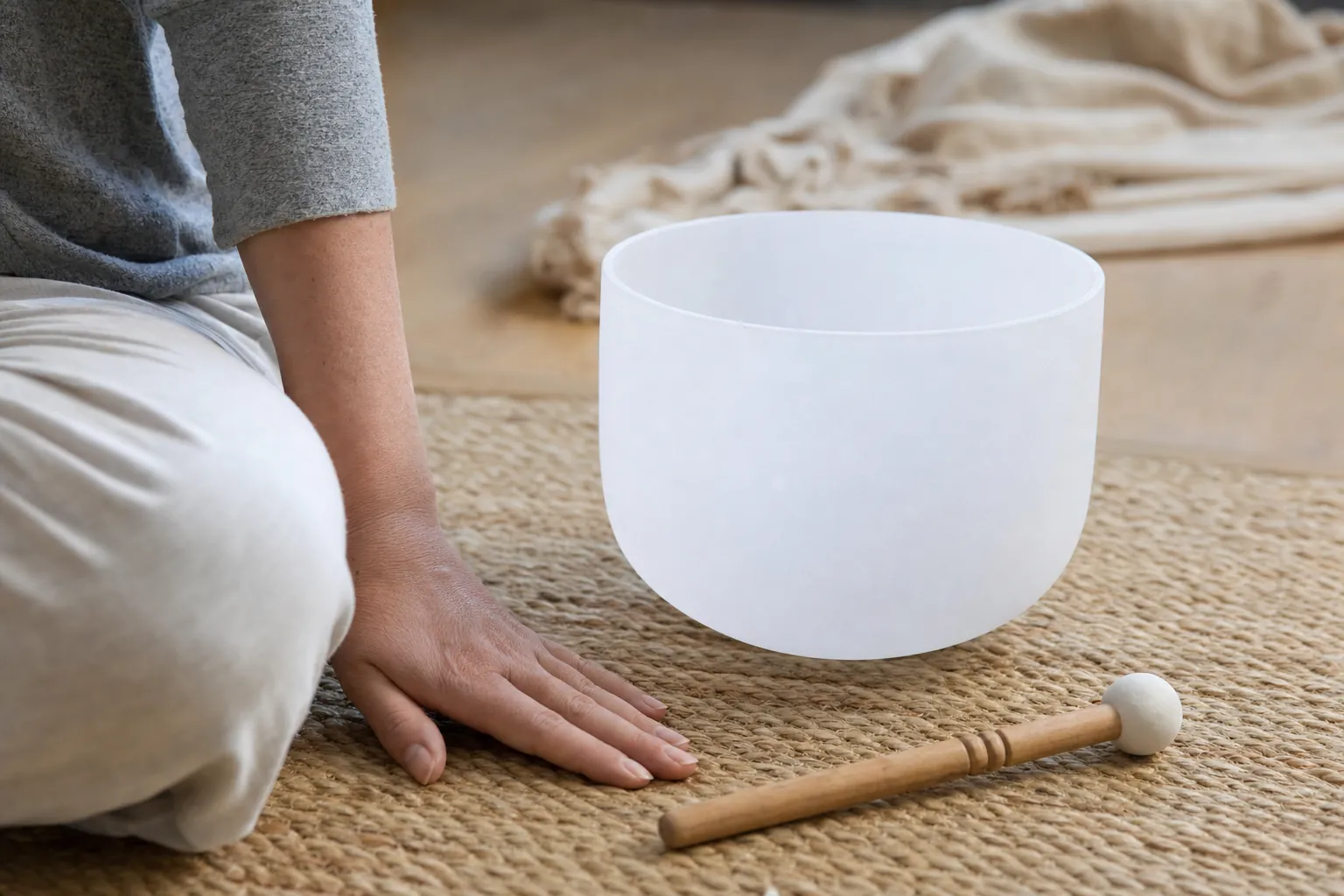
If you choose a physical bowl, learn its basic care and start quietly. Rest it on a cushion or a flat surface. Use the mallet gently. Let the sound settle before striking again. A bowl that is played too hard can feel startling rather than supportive, especially in a small room. You are practicing listening, not trying to fill a concert hall.
A recording works well when you want a consistent, low-pressure practice. Pick a short track without sudden shifts in volume, place your device far enough away that it does not become another screen to stare at, and use a timer so you are not checking the clock. The simplest version is usually the one you will return to.
How to make the practice part of real life
Attach the meditation to a moment that already exists. Try it after you make morning tea, before a journal entry, after work, or before you begin your evening routine. The cue matters more than a perfect schedule. You are making a small promise to pause, not building a new identity overnight.
You can also use sound as a bridge into an existing practice. Begin with two minutes of a bowl before writing. Listen for one tone before opening a guided meditation from Dr. Asia. Sit with a bowl after a walk when you want to arrive home before moving into the next task. Keep the ritual light enough that it does not become another thing to fail at.
Some days the practice will feel quiet. Some days you will feel nothing in particular. Some days you will decide a song, a walk, or a conversation is what you need instead. Let all of those be acceptable. The point is not to become dependent on a tool. It is to become more fluent in noticing what kind of support fits the moment.
When a guided or in-person experience may help
At home, you are responsible for choosing the sound, the pace, and the moment to stop. That can be freeing, but it can also feel like too much decision-making when you are already carrying a lot. A guided experience can give you a clearer container: someone else holds the pacing while you focus on receiving the practice.
If you are in West Palm Beach, Dr. Asia's community sound bath events offer a gentle way to experience bowls in a shared setting. If you want the volume, instruments, and pace shaped more closely around your needs, her private sound and vibrational sessions offer a more personal path. You can also begin with a clarity call when you are unsure which kind of support fits this season.
Keep the invitation simple: make a little room, choose a sound that feels kind to your system, and listen for one tone at a time. A sound bowl meditation does not have to transport you somewhere else. Sometimes its value is that it helps you return, for a few minutes, to where you already are.
Frequently asked questions
What is a sound bowl meditation?
A sound bowl meditation is a listening practice that uses the sustained tone of a crystal or metal singing bowl as an anchor for attention. You can use one bowl, a short recording, or another gentle sound source and return your focus to what you hear when your mind wanders.
How long should a sound bowl meditation be?
Ten minutes is a helpful starting point because it is long enough to settle in without becoming a major commitment. A five-minute practice is also worthwhile, especially when you are new, tired, distracted, or sensitive to sound.
Do I need to own a singing bowl to meditate with sound?
No. You can begin with a quiet recording, a simple chime, gentle instrumental music, or your own humming. A physical bowl can be meaningful if you enjoy it, but it is not required for the practice to count.
Can sound bowl meditation replace therapy or medical care?
No. Sound bowl meditation can be a supportive wellness or spiritual practice, but it does not replace therapy, medical diagnosis, medication, emergency care, or treatment from a qualified health professional.
What if singing bowl sounds make me anxious?
Stop, lower the volume, keep your eyes open, or choose a different practice. A sound meditation should feel optional and adjustable. If sound or stillness makes you more distressed, use a more grounding activity and speak with an appropriate professional when needed.
What is the difference between a sound bowl meditation and a sound bath?
A sound bowl meditation is usually a shorter, self-led practice focused on one bowl or recording. A sound bath is often a longer, immersive session led by a practitioner using one or more instruments while participants rest in a shared or private setting.


