
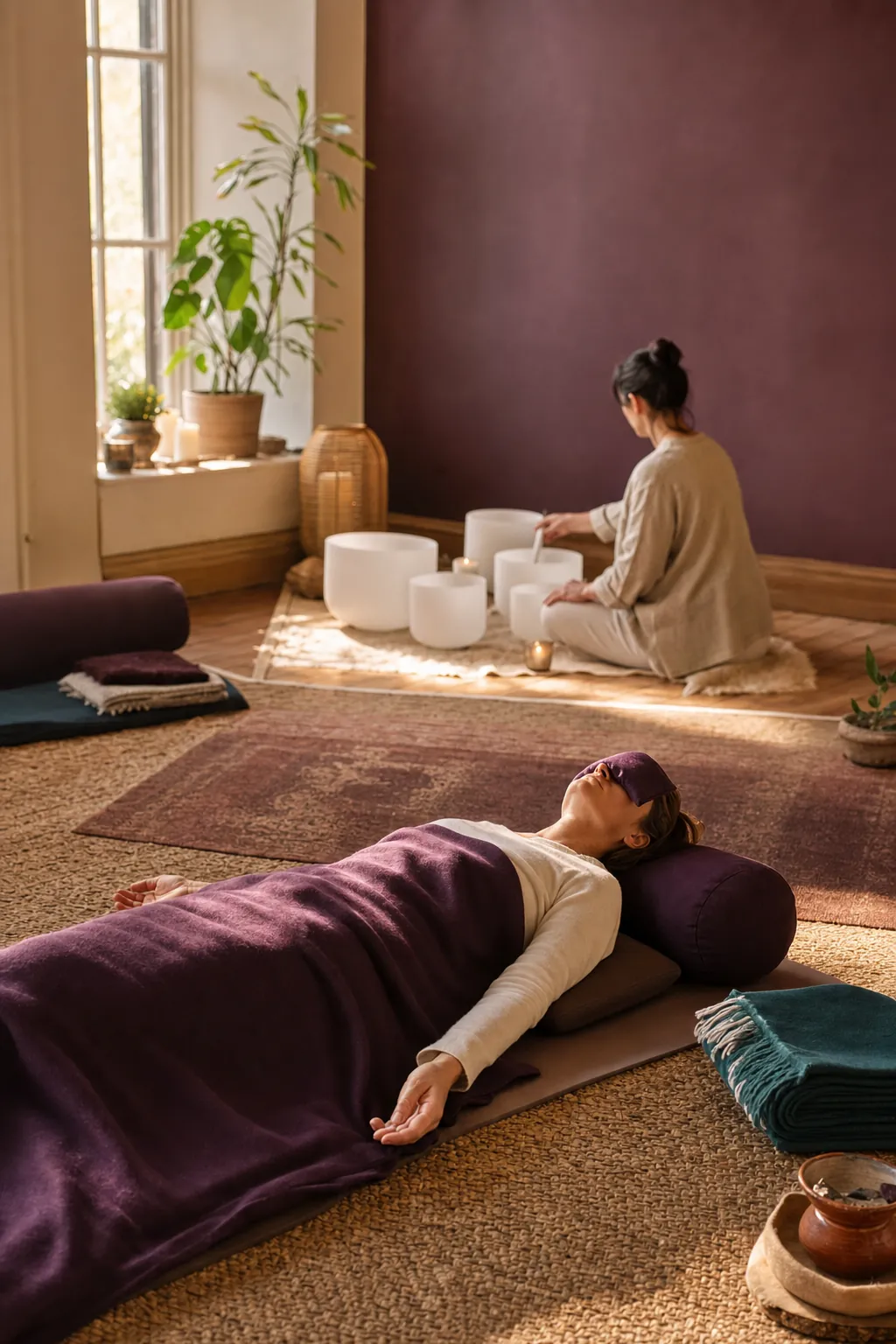
If you have been curious about sound baths but are not sure what actually happens in one, you are not alone. The name can make the experience sound mysterious, yet the basics are wonderfully simple: you rest while a practitioner creates an immersive field of sound using instruments such as crystal bowls, metal singing bowls, chimes, tuning forks, drums, or gongs. There is nothing to perform and nothing to get right. Your only job is to get comfortable enough to listen.
A sound bath is often described as a kind of meditation for people who would rather have something gentle to follow than sit in total silence. Instead of trying to empty your mind, you let changing tones give your attention somewhere soft to land. Some people notice their shoulders release. Some feel sleepy. Some have a busy mind the whole time and still leave feeling more settled. Every one of those responses is normal.
This guide will help you decide whether a first session is a fit, what to bring, and how to choose an experience that feels respectful of your body and your pace. If you are local, you can also explore Dr. Asia's sound baths in West Palm Beach or look through the current community event calendar.
What is a sound bath, exactly?
A sound bath is an immersive listening experience. You may lie down on a yoga mat, rest in a reclined position, or sit in a chair while a practitioner plays sustained, layered tones around the room. The word "bath" is simply a way of describing how sound surrounds you; there is no water involved. Cleveland Clinic describes sound baths as an experience of being immersed in deep sound vibrations, commonly made with instruments including gongs, crystal or metal bowls, tuning forks, and chimes.
You may also hear the same kind of experience called sound healing, sound meditation, or sound bowl meditation. The labels vary, and the room can vary even more. One practitioner may create a quiet, spacious session with crystal bowls and soft voice. Another may use a larger range of instruments, including drums or gongs. Before you go, it is fair to ask what instruments will be used, how the room is set up, and whether you can sit up or step outside if you need to.
The purpose is not to force an outcome. A good session creates conditions for rest, attention, and reflection. You may be drawn to it because you want a break from screens, a slower way to meditate, a ritual for a season of change, or simply an hour where nobody needs anything from you. That is enough of a reason to begin.
What happens during your first session
Most sound baths begin with a few practical minutes. You choose a place in the room, arrange your mat or chair, and settle in with blankets, pillows, or a bolster. The practitioner may invite you to take a few slower breaths, set a private intention, or simply notice how you feel before the sound begins. There is no requirement to share anything personal with the group.
Once the instruments begin, the pace often moves in waves. A session may start with one clear tone, build into layers, become quieter again, and eventually end in a few minutes of silence. You might hear long notes from bowls, light chimes, a gong in the distance, humming, or guided words. Your mind may drift. You may notice sensations, memories, or emotions. You may also notice almost nothing beyond the sounds. The experience is not a test, and there is no correct internal response.
At the end, give yourself a minute before rushing back into the day. Sit up slowly if you have been lying down. Drink water. Notice whether you need a few quiet moments, a short walk, or a little food. The gentlest landing is usually better than immediately checking your phone in the parking lot.
How to prepare without overthinking it
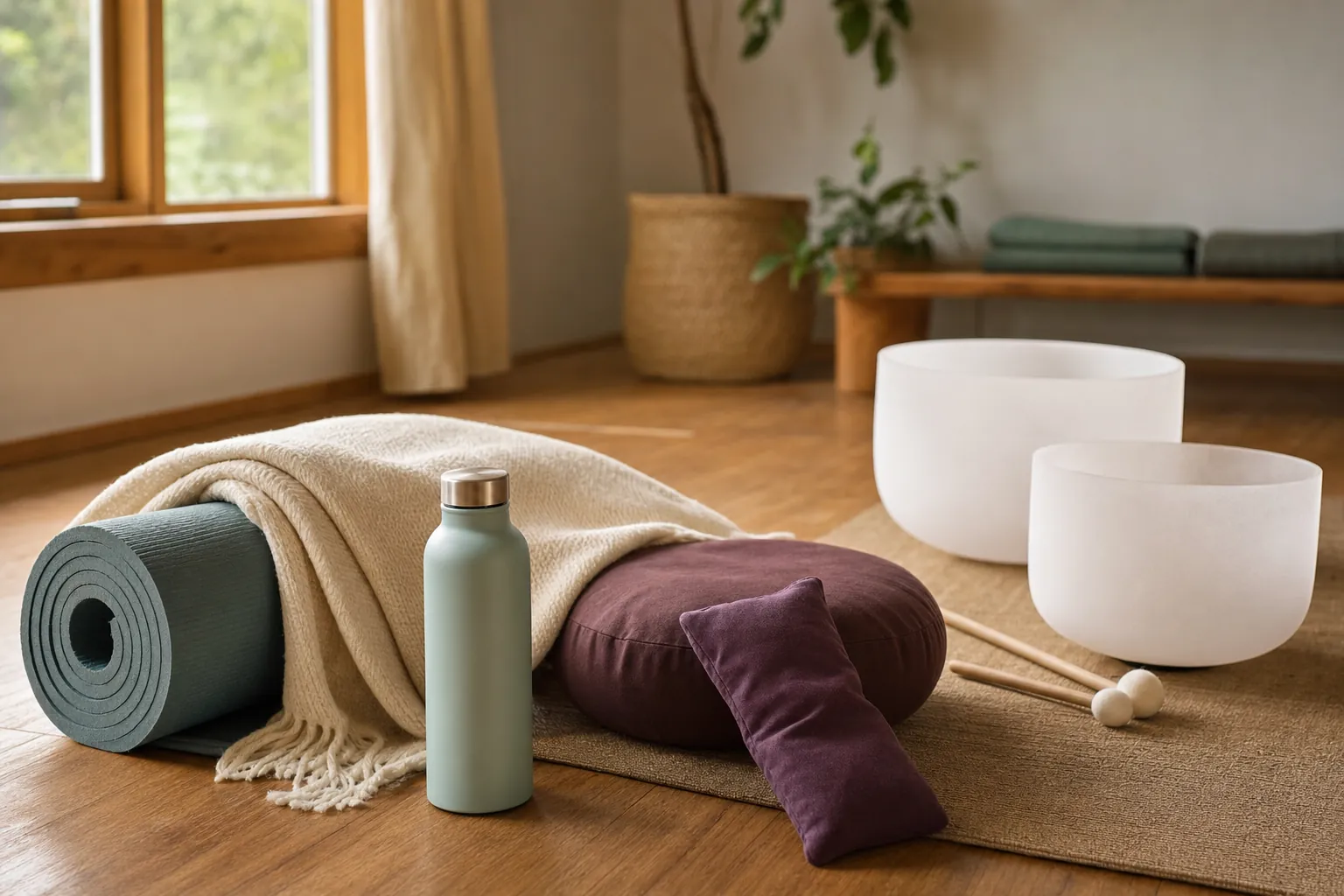
Wear clothing that lets you breathe and move easily. Bring a yoga mat if the event asks for one, plus a blanket, a pillow for your head or knees, and water. Studios can run cool once you are still for a while, so one extra layer is often more useful than a perfectly curated outfit. If you prefer sitting, bring the support you need or ask whether chairs are available.
Eat in a way that leaves you comfortable. Some people like a light meal beforehand; others prefer a small snack. Arrive a few minutes early so you are not trying to settle your nervous system while worrying about being late. If you are sensitive to sound, choose a spot toward the edge of the room, farther from larger instruments or speakers. You can always move closer at another session.
It can also help to leave your expectations at the door. You do not need to have a breakthrough, see colors, fall asleep, release tears, or come away with a perfect answer to a big life question. A sound bath can be meaningful because it gives you a pause, not because it promises a dramatic story. The quieter wins tend to travel farther: a fuller breath, a less clenched jaw, a clearer sense of what you need next.
What you may feel during or after a sound bath
People respond differently to sound. You may feel deeply relaxed, energized, emotional, sleepy, or pleasantly alert. You may have a stream of thoughts at first and notice more ease later. You may also decide that a particular instrument or style is not for you. That is useful information, not a failure.
Research on singing bowls is still limited, and it is important to keep the claims proportionate. A small observational study of Tibetan singing bowl meditation reported changes in participants' tension and mood, while a broader review cited by Cleveland Clinic concluded that more rigorous research is needed. The original singing-bowl meditation study is a useful starting point for curious readers, but it does not turn a sound bath into medical treatment or a substitute for care from a qualified health professional.
That distinction matters. Sound baths can be a supportive wellness or spiritual practice. They are not a diagnosis, a cure, or a replacement for therapy, medication, emergency care, or treatment recommended by your clinician. Let the practice be one part of a larger way you care for yourself, not a reason to ignore something that needs professional support.
When to choose a gentler option
You are always allowed to choose the softer room. If loud or unpredictable sound makes you anxious, ask about the instruments in advance and choose a session with a more spacious style. If you are navigating pregnancy, a concussion, tinnitus, sensory sensitivity, significant hearing concerns, or a serious mental health condition, check with the right health professional first and make a plan that feels appropriate for you.
A group experience is never the only doorway. A quiet recording, humming, gentle music, or a short meditation may be a better fit on a tender day. Dr. Asia's guided meditations offer a lower-pressure way to build a practice at home, and the guide to sound baths during pregnancy explains the practical questions to ask if you are expecting.
Pay attention to how a facilitator speaks about discomfort. No one should pressure you to stay in a position that hurts, sit through a volume that feels overwhelming, or treat your boundaries as resistance to the work. You can change position, cover your ears, sit in the hallway, leave early, or decide that today is not the day. Your body is not an obstacle to the session. It is the reason the session should be adapted with care.
A five-minute sound-bowl practice at home
You do not need a room full of instruments to explore sound as a meditation aid. Start with five minutes and one simple sound. It could be a quiet singing-bowl recording, a few gentle chimes, soft instrumental music, or even your own humming. Choose a volume that lets you remain aware of your surroundings. Sit in a supported chair or rest in a position your body already likes.
For the first minute, notice the points of support beneath you: your feet, the chair, the floor, or the blanket. For the next three minutes, let the sound come and go without chasing it. When your attention wanders, notice that and return to one small detail in the tone: its length, its fading edge, or the space between notes. For the final minute, turn the sound off and notice the room. You have practiced. It does not need to be more complicated than that.
How to choose the right first sound bath
The best first experience is usually the one with enough clarity around it. Look for a facilitator who explains the setting, the instruments, the length, and what you should bring. Read the event details. Ask whether beginners are welcome. Ask if you can use a chair. Ask whether there will be strong gongs, drums, breathwork, smoke, or hands-on adjustments. Clear answers are a green flag.
Then choose based on the kind of support you want. A community sound bath can be a beautiful way to rest alongside other people without having to make conversation or disclose your story. A private session may be a better fit when you want the room, volume, instruments, and pace shaped around your needs. Neither is more advanced. They simply offer different kinds of space.
A local place to begin with Dr. Asia
Dr. Asia Taylor creates sound experiences with softness, spiritual grounding, and room for real life. Her sound and vibrational sessions include private options for people who want a more personal pace, while her West Palm Beach events offer a welcoming community setting. If you are unsure which path fits, a clarity call is the simplest place to start.
Come with curiosity, not pressure. You do not need to be good at meditation. You do not need to understand every instrument. You only need enough willingness to get comfortable, listen, and let the next hour be slower than the one before it.
Frequently asked questions
What is a sound bath?
A sound bath is a restful listening experience where you sit or lie down while a practitioner plays instruments such as crystal singing bowls, metal bowls, chimes, tuning forks, drums, or gongs. The changing tones give your attention something gentle to follow, much like a meditation practice.
What should I bring to a sound bath?
Bring whatever helps your body rest comfortably: a yoga mat if requested, a blanket, water, and a pillow or bolster for support. Wear comfortable layers because rooms can feel cool once you are lying still.
Do I need meditation experience for a sound bath?
No. You do not need any meditation experience. A sound bath can be especially approachable for people who find complete silence difficult because the instruments provide a gentle place to return your attention.
What does a sound bath feel like?
People have different experiences. You may feel relaxed, sleepy, thoughtful, emotional, energized, or simply aware of the sounds. There is no correct reaction, and you do not need to have a dramatic experience for the session to be worthwhile.
Can a sound bath replace therapy or medical care?
No. Sound baths can be a supportive wellness or spiritual practice, but they do not replace therapy, medication, medical diagnosis, emergency care, or treatment recommended by a qualified health professional.
Can I sit in a chair during a sound bath?
Usually, yes. Many people are more comfortable seated, especially when lying on the floor does not suit their body. Ask the facilitator before attending so you can choose a setup that feels supportive.


