
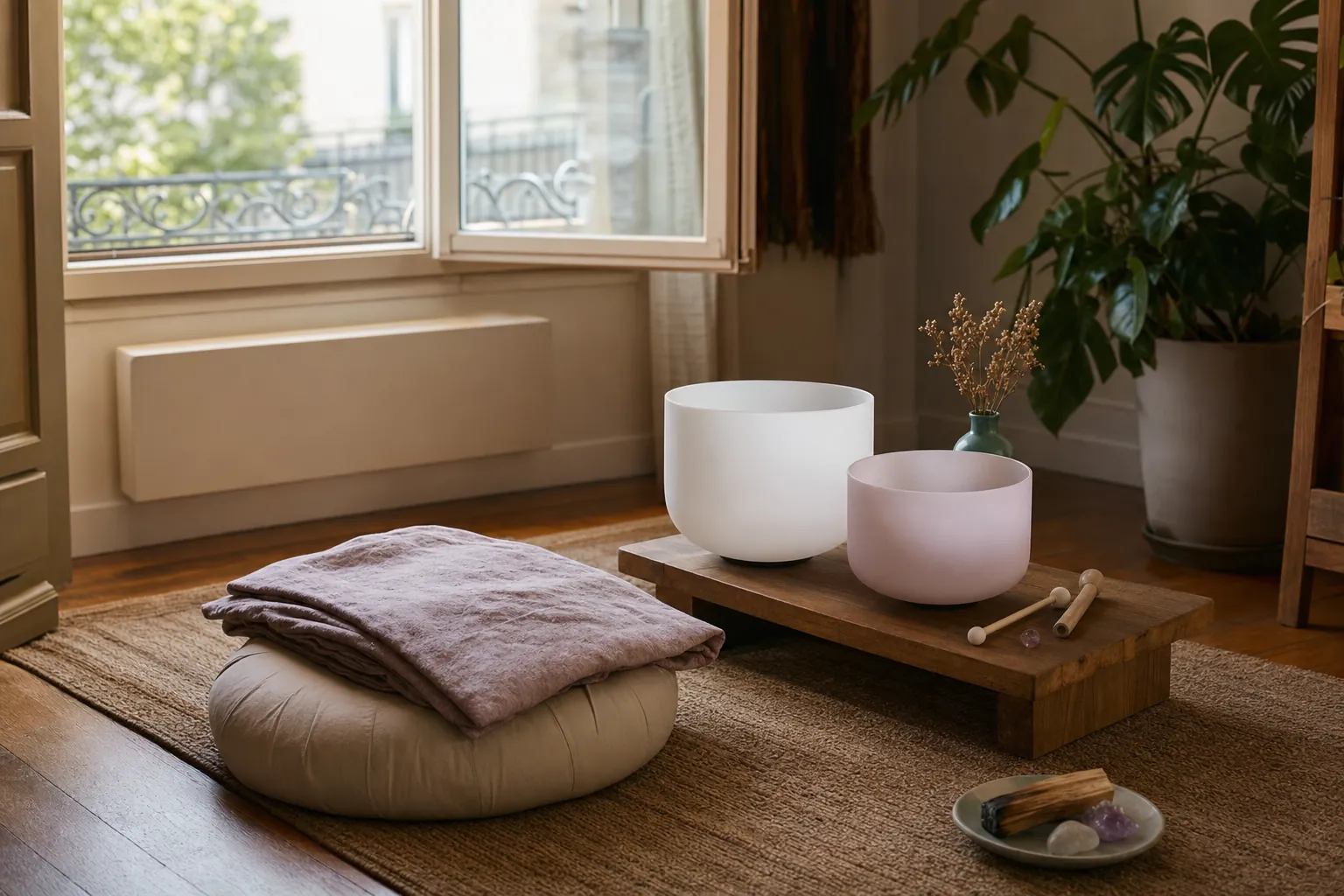
A sound bath at home does not need to look like a studio, take an hour, or involve a collection of expensive instruments. At its simplest, it is a short listening practice: you make a little room, choose a sound that feels comfortable, and let yourself pay attention without needing to perform relaxation. One singing bowl is enough. A recording is enough. Quiet humming is enough. The point is not to create a dramatic experience. It is to give your body and attention a softer place to land.
This guide is for the days when you want a pause but do not want another complicated ritual on your list. You will find a practical 20-minute home sound bath below, plus ways to adjust it for a busy mind, a small living room, or a body that would rather sit in a chair than lie on the floor. Take what feels useful and leave the rest.
If the phrase itself is new to you, begin with what a sound bath is and what a first session can feel like. A home practice is simply the smaller, self-led version: you choose the setting and the sound, then give yourself permission to listen at your own pace.
What you need for a simple home sound bath
Start with comfort before aesthetics. Choose a place where you can hear the sound without competing with a television, work notification, or urgent pile of laundry. You do not need perfect silence. A little street noise, an air conditioner, or a neighbor moving around does not ruin the practice. You are not trying to control every sound in your life. You are giving your attention one gentle thing to return to.
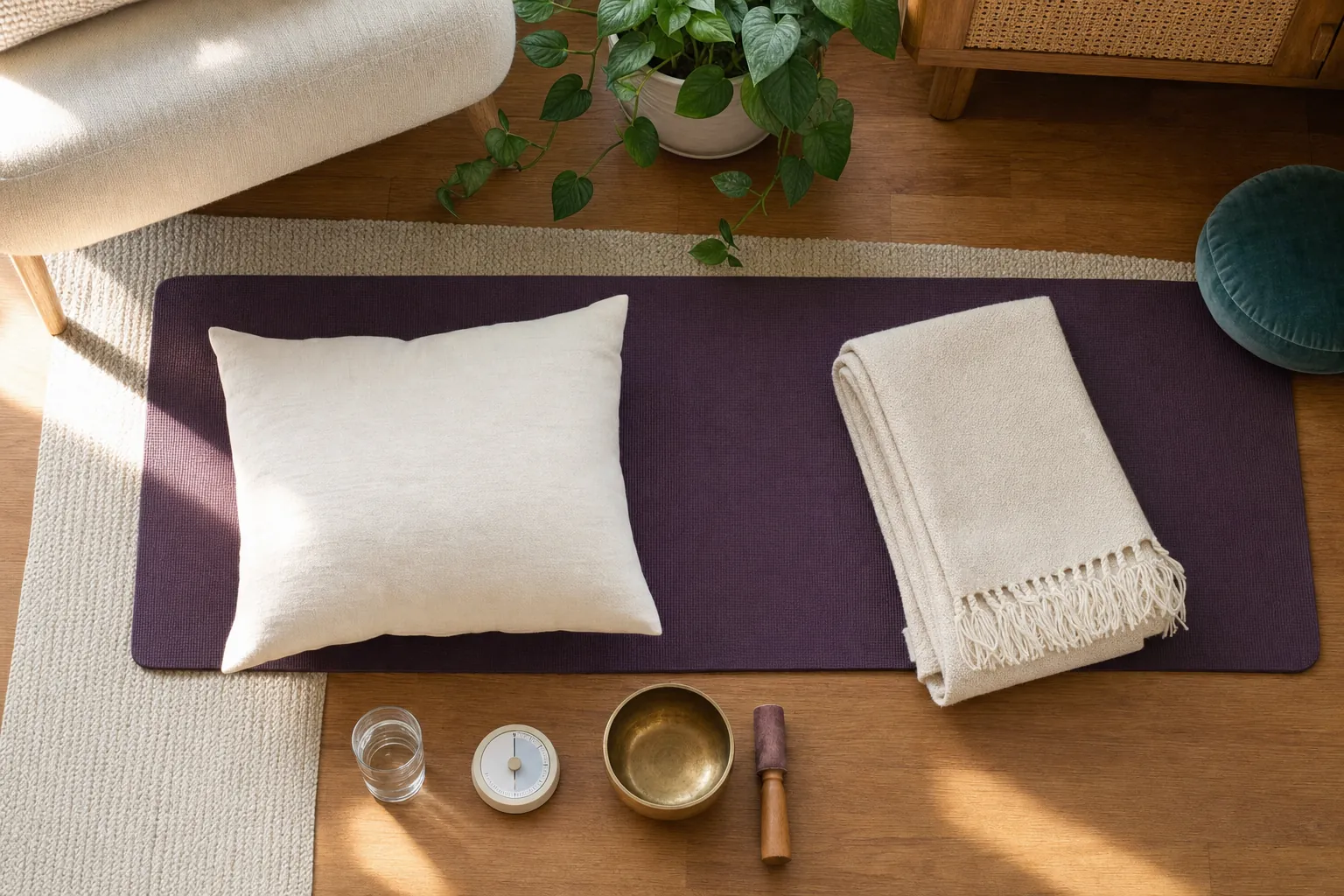
You will need a supported place to rest, one sound source, and something to help you finish without rushing. A yoga mat with a blanket and pillow works well if your body enjoys the floor. A bed, couch, or comfortable chair works just as well. Keep water nearby. Set a timer before you begin so you are not opening your eyes to check the clock. If you use a phone for audio, put it on airplane mode or turn off notifications first.
For the sound itself, use what is accessible. A physical singing bowl can be lovely, but it is not a requirement. A low-volume recording, a short guided meditation, soft instrumental music without sudden changes, or even your own hum can create a clear listening anchor. If you have a bowl and would like a little more guidance using it, the sound bowl meditation guide walks through a simpler ten-minute practice.
Dr. Asia also shares sound bath recordings in different styles and lengths on her YouTube channel, so you can choose a practice that fits the time and kind of support you need today.
Set the volume for comfort, not intensity
A sound bath should not feel like something you have to endure. Keep the volume low enough that you can still hear the room around you and speak comfortably if you need to. The National Institute on Deafness and Other Communication Disorders offers a simple rule that fits beautifully here: avoid sound that is too loud, too close, or lasts too long. In practice, that means moving a speaker farther away, lowering the volume, or choosing a quieter source when your body starts to brace.
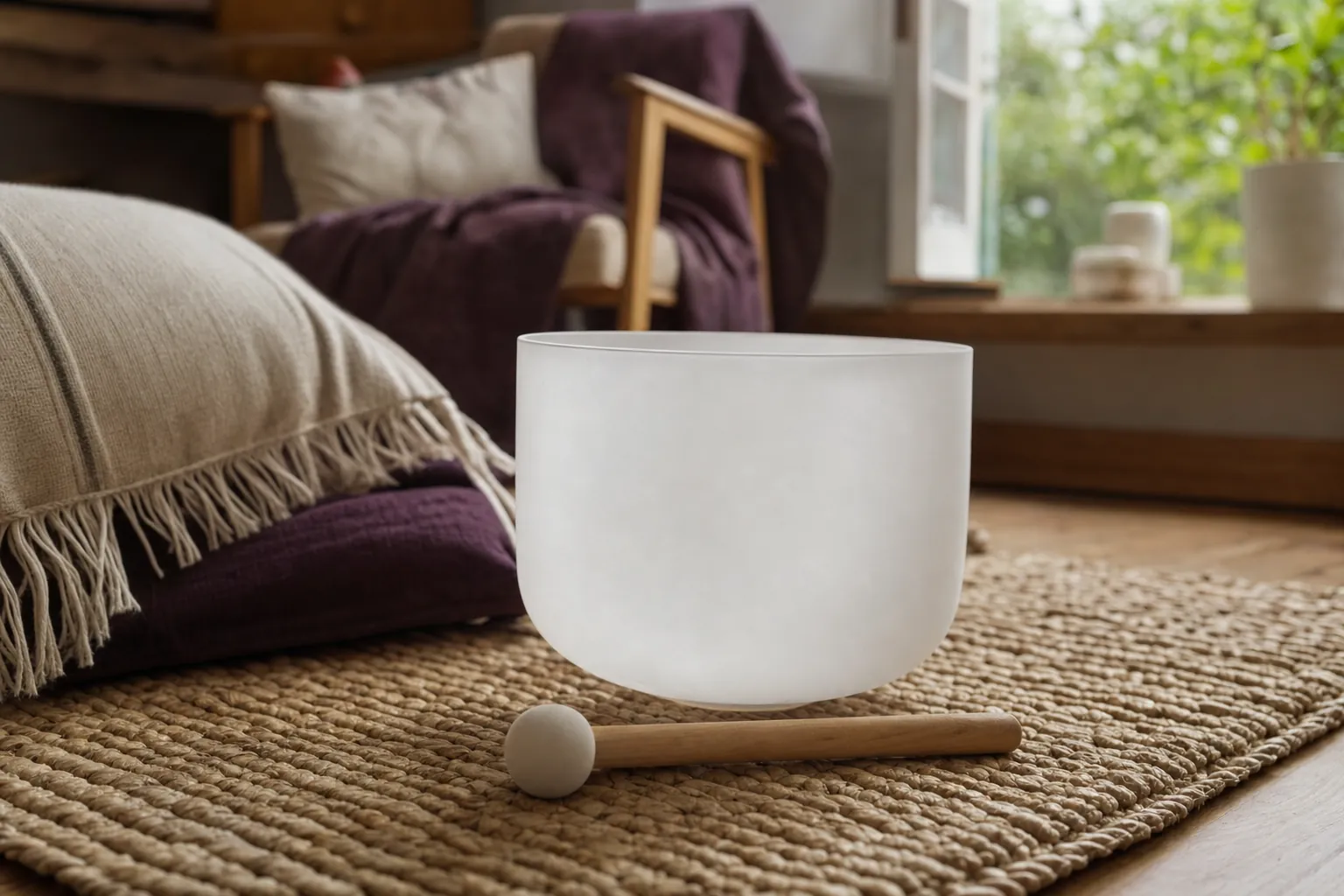
Headphones are optional, not automatically better. They can make a recording feel immersive, but they can also make the sound feel too close or disconnect you from your surroundings. A small speaker placed across the room often gives a gentler experience. If you use a singing bowl, place it on a steady surface or cushion and play it softly. Let each tone fade before you create another one. You are practicing listening, not filling the room.
Sound can be one object of meditation, alongside breath, a visual image, or a repeated phrase. The National Center for Complementary and Integrative Health describes meditation as a family of practices that may use a particular sensation, including sound, as a focus. That is a useful frame for a home sound bath: the tone does not need to fix anything. It gives your mind somewhere steady to return when it wanders.
A 20-minute sound bath you can do at home
Set a timer for 20 minutes. This sequence is not a rulebook; it is a container. If you only have five minutes, take five. If 20 minutes feels long today, pause when you are ready. A practice is more likely to become part of your life when it respects your actual life.
Minutes 1 through 3: arrive. Sit or lie down in the position that asks the least from your body. Notice three points of support: your feet on the floor, your back against a chair, the blanket over your legs, or the mat beneath you. Let your shoulders settle if they want to. Take three ordinary breaths. You do not need to inhale deeply or control the exhale. You are simply giving your attention time to catch up with where you are.
Minutes 4 through 7: begin with one sound. Strike your bowl gently, start your recording, or hum one comfortable note. Listen for the beginning of the sound, the full part of the tone, and the moment it starts to thin out. When a thought arrives, you do not need to fight it. Notice that you are thinking, then return to the sound. This is the whole practice in miniature: drift, notice, return.
Minutes 8 through 12: let the sound make more space. If you are playing a bowl, wait longer between tones than you think you need to. If you are listening to a recording, allow the sound to be background rather than something you must analyze. Notice whether your jaw, hands, belly, or forehead are working hard. You do not have to make them relax. Simply notice what is there. If you want to change position, do it. Comfort is not cheating.
Minutes 13 through 16: widen the field. Let the bowl, recording, or hum be one part of a larger soundscape. Notice the refrigerator, traffic outside, birds, a fan, or the sound of your breath. This is often where a home sound bath becomes more grounded. You are not escaping your life. You are letting yourself meet the ordinary room with a little less urgency.
Minutes 17 through 19: lower the stimulation. Turn the recording down or stop playing the bowl. Sit with the quieter room. If silence feels edgy, leave one soft sound in the background. Place a hand on your chest, thigh, or blanket if that gives you a clear point of contact. Ask only one gentle question: What would make the next hour easier to move through? You do not need an answer immediately.
Minute 20: close slowly. Open your eyes if they were closed. Look around and name three objects in the room. Take a drink of water. Stand up in your own time. Try not to judge whether the practice worked. Maybe you feel calmer. Maybe you feel exactly the same but noticed that you were holding your breath. Maybe you just kept one promise to yourself. All of those are valid outcomes.
Choose an intention that does not turn into pressure
An intention can make a home sound bath feel more personal, but it should not become a demand. You do not need to ask the practice for a breakthrough, an answer, a release, or proof that you are healing correctly. On a tender day, a good intention may be as plain as: I want to be here for ten minutes. I want to hear what my body is asking for. I want to move a little more slowly before the next thing.
Try choosing an intention that describes how you want to meet yourself rather than what you want to make happen. “I will listen without rushing” is gentler than “I will get rid of this feeling.” “I will let today be what it is” gives you more room than “I will become calm.” The language matters because your body can tell the difference between an invitation and another performance review.
You can also skip an intention completely. Begin with a practical observation instead: I am tired. My shoulders are tight. I have been staring at a screen. I miss quiet. Naming the moment honestly is already a form of attention. Let the sound meet you there instead of asking it to carry you somewhere else.
What to do when your mind is busy
A busy mind does not mean you are doing a sound bath wrong. It usually means your mind has a lot to process. Trying to force stillness can turn a supportive practice into another place where you feel behind. Give your attention a smaller job instead. Listen for the longest note. Notice the first moment the sound disappears. Feel the warmth of your tea cup. Count five breaths. Specific details are often more helpful than trying to create a particular state.
If emotion rises, you can pause the sound and look around the room. Keep your eyes open. Put both feet on the floor. Make the practice shorter. Move to a chair. Call someone you trust. A sound bath can be a supportive wellness or spiritual practice, but it is not a substitute for therapy, medical care, medication, emergency support, or treatment from a qualified professional. The best practice is the one that leaves you more able to care for yourself after it ends.
Make it work in a small home or full schedule
You do not need a dedicated meditation room. Use the side of the bed after you make it in the morning. Sit in the car for three minutes before walking into the house. Put a blanket over your legs in your favorite chair after work. The setting matters less than the repeatable cue. You might pair the practice with making tea, changing out of work clothes, closing your laptop, or opening your journal.
Keep the first version easy enough that you will actually do it. A five-minute recording after dinner is more useful than an elaborate 90-minute ritual you only attempt once. A single bowl on a shelf is more useful than a beautiful collection you are afraid to use. The practice becomes yours when it can travel with your real schedule, your real energy, and your real home.
A small home can become an advantage because it asks you to keep the practice simple. Clear one chair. Fold one blanket. Put one bowl or speaker in one place. When the ritual takes less than two minutes to set up, you are more likely to choose it when you are tired. If you live with other people, tell them you are taking 20 quiet minutes, or choose a time when the household naturally settles. The practice does not need to be perfectly protected to be meaningful.
You can also create different versions for different kinds of days. Keep a three-minute reset for a busy afternoon, a ten-minute bowl practice for an ordinary evening, and the full 20-minute sound bath for days when you have more room. This prevents the habit from becoming all or nothing. The question is not whether you did the ideal ritual. The question is whether you found a version of care that genuinely fit the moment you were in.
When a guided or in-person sound bath may be a better fit
Some days you may not want to choose the music, watch the timer, or decide what comes next. A guided experience can offer a useful container because someone else holds the pace while you simply receive. Dr. Asia's community sound bath events in West Palm Beach offer a welcoming way to experience crystal bowls in a shared setting. Her private sound and vibrational sessions are a better fit when you want the volume, instruments, and pace shaped around what you are carrying.
You can also start with a clarity call when you are unsure which path fits. There is no prize for doing it all alone. A home sound bath can be a lovely personal practice, and it can also be a way to discover that you would like more support, more community, or more room to simply receive.
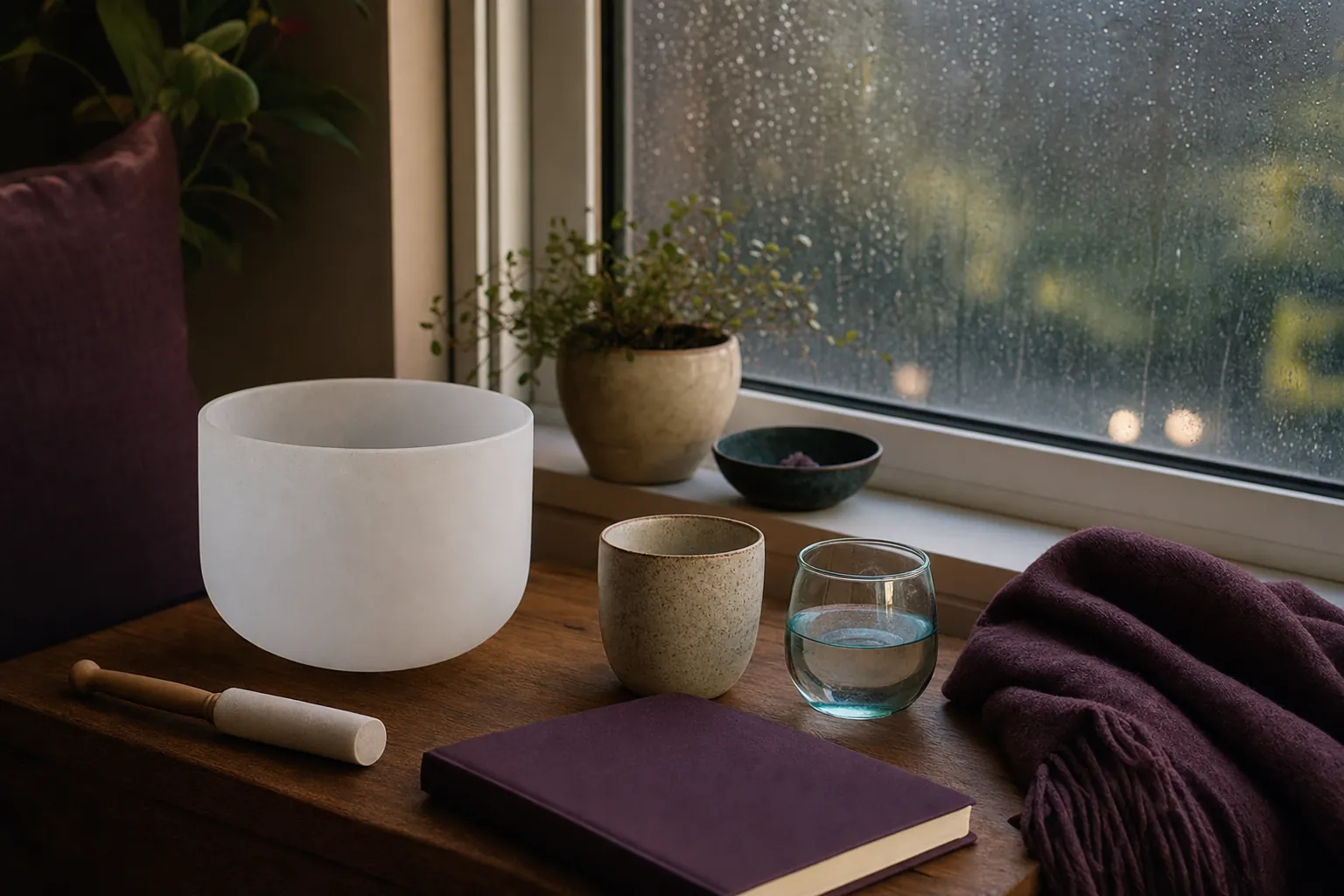
Begin simply. Make one small comfortable space. Choose one sound that does not ask too much from you. Listen until the next breath feels a little easier to notice. That is enough for today.
Frequently asked questions
Can I do a sound bath at home without singing bowls?
Yes. A home sound bath can use a gentle recording, soft instrumental music, chimes, humming, or another sound that feels comfortable. The practice is about giving your attention a steady listening anchor, not owning a particular instrument.
How long should a home sound bath be?
Start with five to 20 minutes. A short practice you can repeat is usually more helpful than a long session that feels like a chore. You can stay longer when your body and schedule genuinely have room for it.
Should I use headphones for a sound bath at home?
Headphones are optional. Some people enjoy the immersion, while others prefer a speaker across the room because it feels less intense and keeps them aware of their surroundings. Choose the option that feels comfortable, and keep the volume low.
What if a sound bath makes me anxious or uncomfortable?
Pause the sound, lower the volume, open your eyes, sit up, or stop the practice. A sound bath should feel adjustable. If sound or stillness makes you feel more distressed, choose a more grounding activity and seek appropriate professional support when needed.
Can I do a sound bath while working or falling asleep?
You can listen to gentle sound while working or winding down, but a sound bath is most useful when you can give it a small amount of focused attention. Even five minutes away from screens and tasks can feel different from using sound as background noise.
Can a home sound bath replace therapy or medical care?
No. A home sound bath can be a supportive wellness or spiritual practice, but it does not replace therapy, medical diagnosis, medication, emergency care, or treatment recommended by a qualified health professional.


