
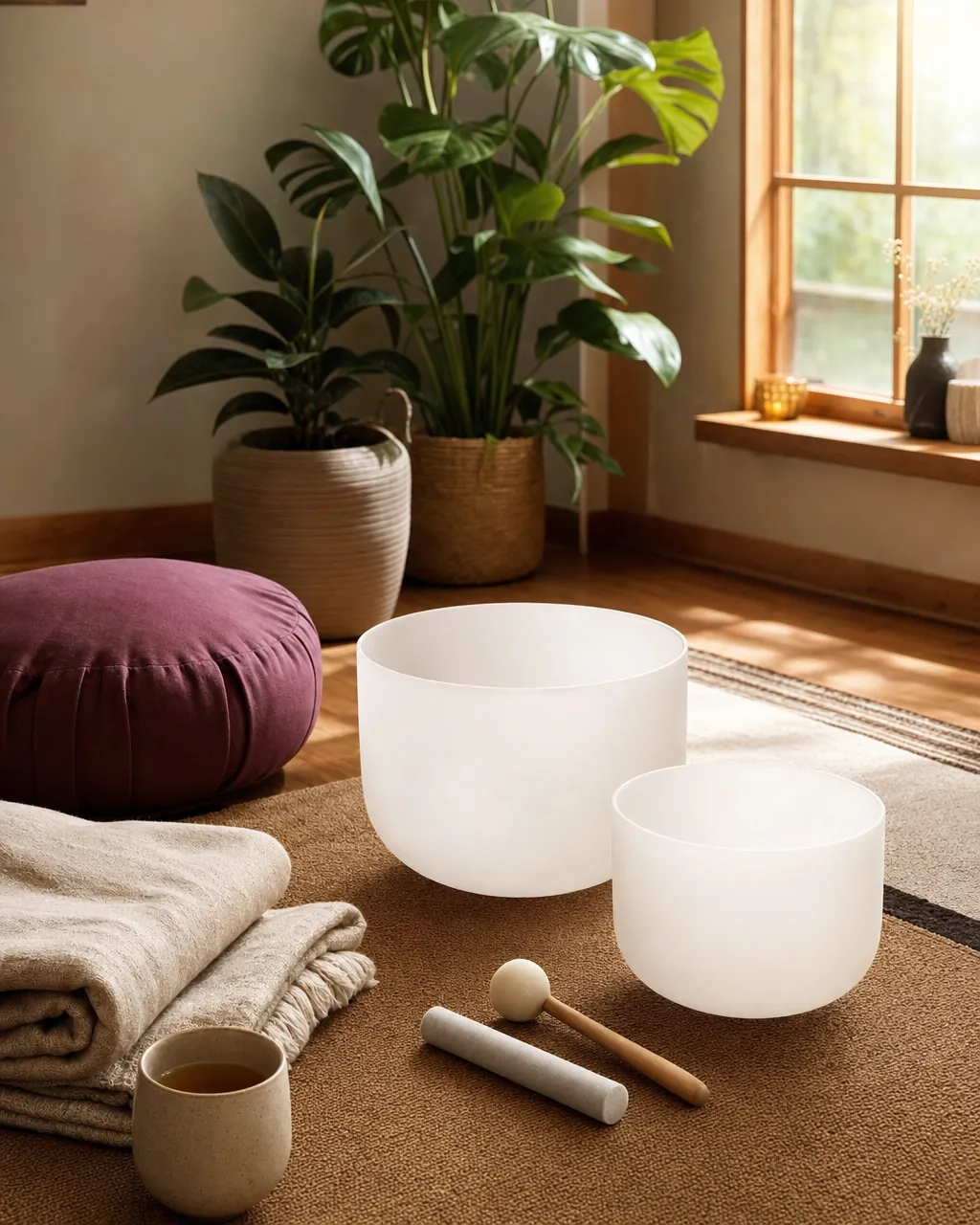
When people ask about sound bath benefits, they are usually asking a very human question: can I have one hour, or even ten minutes, where I do not have to hold every thought at once? A sound bath can create that kind of pause. You rest while sustained tones from crystal bowls, metal bowls, gongs, chimes, or other instruments fill the room. Some people notice that the sound gives a busy mind one simple thing to follow. Others enjoy the chance to lie down, breathe normally, and step out of their usual pace for a while.
That does not mean every sound bath feels profound, or that it needs to. A useful session might leave you quieter, more aware of your shoulders, ready for a nap, ready to journal, or simply glad you took a break. It might also feel like too much sound on a tender day. The honest value is not a promise that vibration will solve your life. It is the chance to listen, notice, and choose what support fits your body in that moment.
If you are entirely new to the practice, begin with what a sound bath is and what a first session can feel like. This guide looks more closely at the benefits people often hope for, the evidence that is available, and the practical choices that make the experience gentler.
The most realistic sound bath benefits
A sound bath can offer a container for attention. Instead of trying to empty your mind, you can notice the beginning of a tone, the way it shifts, and the quiet after it fades. That kind of listening gives your attention a place to return when it wanders. For someone who finds silent meditation frustrating, sound may feel like a more welcoming entry point.
The National Center for Complementary and Integrative Health describes meditation and mindfulness as practices that can use a sensation, thought, image, or other focus for attention. A singing bowl or layered soundscape can be one possible focus. The bowl is not doing the inner work for you. It is simply giving you something concrete to hear while you practice coming back to the present.
The rest around the sound matters too. Many sound baths invite you to lie down with a blanket, soften your gaze, and stop performing for a little while. A quieter room, a supported body, and fewer decisions can be a relief on their own. You do not need to chase a dramatic release for that pause to count.
Why sound can feel easier than silence
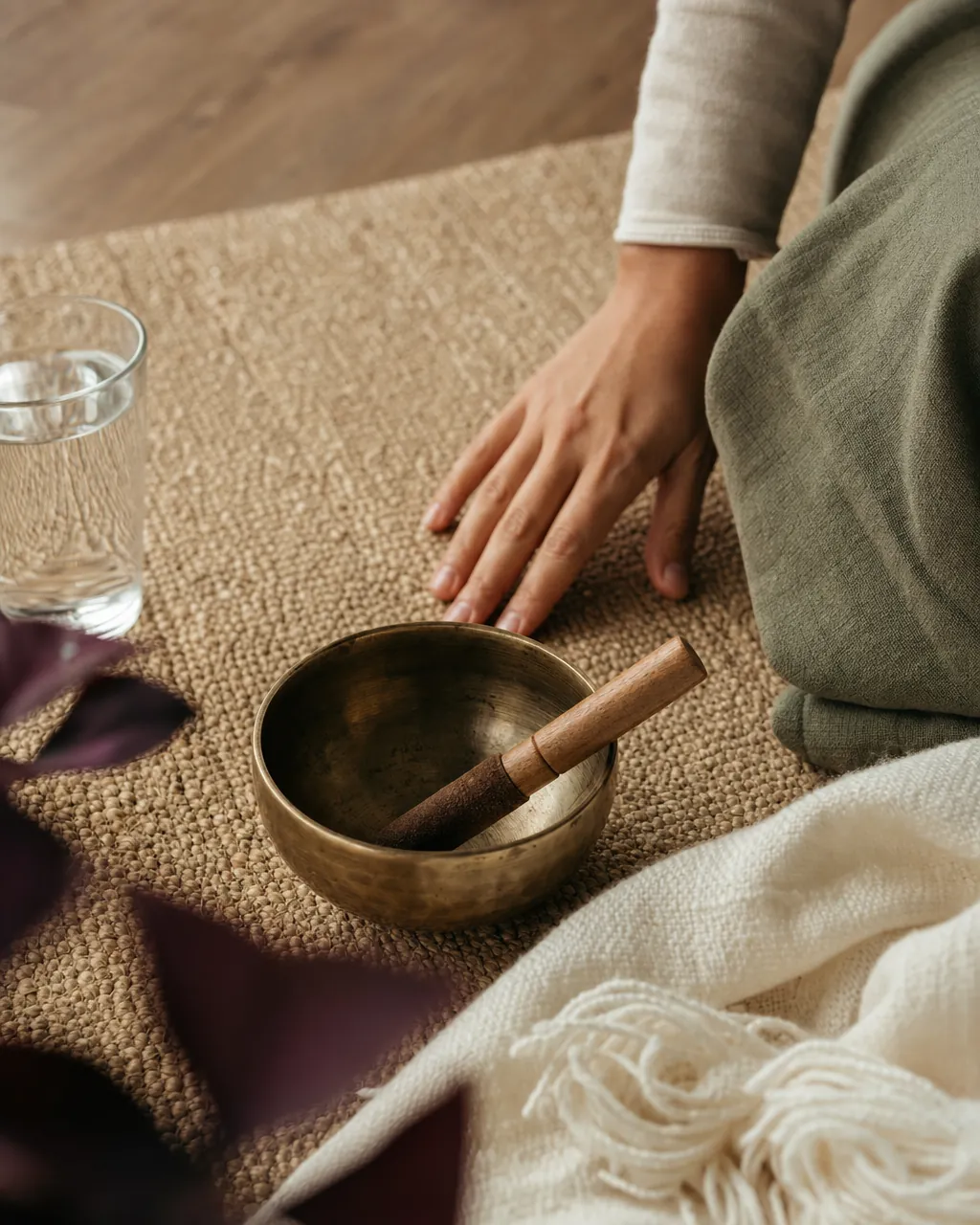
Silence asks you to meet your thoughts directly. That can be beautiful, but it can also make a full mind feel louder at first. Sound gives your awareness a gentle task. You can listen for the longest note, notice which tone feels sharp or warm, or pay attention to the space between instruments. There is less pressure to have a particular spiritual experience.
A group sound bath can also make rest feel more permissible. You arrive at a set time, settle into a shared room, and let someone else hold the pacing. At home, you can create a smaller version with a recording or a single bowl. Dr. Asia's 20-minute guide to a sound bath at home is useful when you want the pause without leaving your living room.
The practice works best when it stays simple. You do not need to decode every note or know which instrument belongs to which energy center. Let the sound be sound. Notice whether it helps you feel more settled, more alert, or simply more aware of what you need next.
What research can and cannot tell us
Research on singing bowls and sound baths is still limited. A small observational study of Tibetan singing bowl meditation reported changes in participants' tension and mood after a session, but it cannot show that the bowls caused those changes or that every person will have the same experience. You can read the original study of Tibetan singing bowl meditation for the details and its limits.
That is why it is better to speak about possibility than promise. A sound bath may support a mindful pause, a sense of comfort, or a personal ritual. It is not a medical treatment, a diagnosis, or a substitute for therapy, medication, emergency support, or care from a qualified health professional. If you are navigating significant anxiety, depression, trauma, pain, sleep problems, or a health concern, let a sound bath be one optional layer of support, not the entire plan.
This grounded approach does not make the practice less meaningful. It makes it easier to trust yourself inside it. You can enjoy a session without having to prove that it changed your brain, cleared your past, or made you a different person by the time you stand up.
Comfort is part of the benefit
The version of a sound bath that feels good is not always the version that looks most impressive. A chair may suit you better than the floor. A folded blanket under your knees may matter more than another instrument. Keeping your eyes open, sitting close to an exit, or taking a seat near the edge of the room can make the experience feel more manageable. You are allowed to adjust.
Before a session, bring water and anything that helps your body settle: a mat, pillow, light blanket, socks, or a layer for changing room temperature. At home, lower the lights if that feels comforting, but do not turn the room into an obstacle course. The best setup is the one you can leave easily if you need to stretch, use the restroom, or take a breath.
Keep the volume kind to your ears
More volume does not create more benefit. Keep speakers and bowls at a distance that feels comfortable, especially in a small room. The National Institute on Deafness and Other Communication Disorders explains that loud sound can damage hearing, and reducing exposure to overly loud sound is a practical way to protect it. In a sound bath, that means you can move farther away, use ear protection, ask about the instruments, or choose a quieter seat.
Pay attention to your own signals. If your jaw tightens, your ears ring, your body braces, or you feel dizzy, the sound is not serving you at that intensity. Step outside, lower the volume, or stop. This is especially important if you have tinnitus, hearing concerns, a recent concussion, strong sound sensitivity, or another reason to be careful with sound. A clinician who knows your situation can help you decide what is appropriate.
A quieter experience can still be deeply absorbing. One sustained bowl across the room, a low-volume recording, or a few minutes of humming may be enough. The goal is not to overwhelm your senses. It is to give your attention a softer place to land.
How to get more from a sound bath without forcing it
Arrive a few minutes early so you are not rushing from the parking lot or another task directly onto the mat. Choose one simple intention if it helps, such as I want to rest, I want to listen, or I want to notice what I need. You do not need a perfect question or a dramatic theme. A plain intention gives you permission to meet the hour as you are.
During the session, let your focus move between the sound and your body. Notice your breath, the contact of the floor beneath you, or the temperature of the room. When thoughts show up, you do not need to fight them. Return to the next tone. The sound bowl meditation guide offers a gentle ten-minute practice if you want to try that style of listening first.
Afterward, give yourself a small landing. Drink water. Walk slowly to your car. Write down one sentence if something stayed with you. Avoid deciding immediately whether the session worked. Let your body have a little time to respond in its own ordinary way. On days when you want a more self-led practice, the beginner's guide to singing bowls can help you start quietly with one instrument.
When a guided experience may be the better fit
A recording can be a lovely way to pause at home, but an in-person session offers a different kind of support. You do not need to choose the music, watch the clock, or make the instruments behave. Dr. Asia's community sound bath events in West Palm Beach offer a shared place to listen and rest. For a more personal container, her private sound and vibrational sessions make room for the instruments, pace, and comfort choices to be shaped around what you are carrying.
If you want to understand the instruments more deeply, the Creatrix Academy course library includes sound-healing foundations and Crystal Bowl Mastery. And if you are unsure which kind of support fits this season, a clarity call is a simple place to begin.
The best sound bath benefit may be the least flashy one: you give yourself a little room to hear what is already happening inside you. No grand claim is required. Let the sound be an invitation, let comfort lead, and take only what helps you return to the rest of your life with a little more presence.
Frequently asked questions
What are the benefits of a sound bath?
A sound bath may offer a focused pause, a gentler way to practice attention, and a chance to rest in a supported setting. Some people find the sustained tones easier to follow than silence. Experiences vary, so it is better to treat a sound bath as a wellness or spiritual practice than as a guaranteed result.
Can a sound bath reduce stress or anxiety?
Some people feel calmer after a sound bath, but it is not a treatment for anxiety or stress-related conditions. Research on singing bowls is still limited, and a sound bath does not replace therapy, medical care, medication, or support from a qualified mental health professional.
What should I expect after a sound bath?
You may feel rested, thoughtful, sleepy, energized, or simply unchanged. Give yourself a few quiet minutes to drink water, stretch, and notice how you feel before rushing into the next part of your day. There is no single correct response.
Can sound baths be too loud?
Yes. You should be able to hear the instruments without feeling pain, ringing, dizziness, or a need to brace. Move farther away, use hearing protection, ask for a quieter seat, or step out if the sound feels overwhelming.
Who should be cautious with sound baths?
Anyone with hearing concerns, tinnitus, a recent concussion, strong sound sensitivity, or another health reason to be careful with sound should keep the volume low and ask an appropriate clinician for guidance. You can also choose a shorter, quieter practice or skip sound altogether.
Do I need experience with meditation to attend a sound bath?
No. You do not need to know how to meditate or arrive with a specific goal. You can rest, listen to the tones, keep your eyes open, change position, or leave early if needed. A sound bath can be a welcoming first step into a more intentional pause.


